


Page 27 - Priorities #66- Winter 2017
P. 27
What propelled him to leave, once the Hungari- an Uprising of 1956 temporarily opened the borders, was the same drive that had propelled him across the icy Danube years earlier. “I wanted to be a teacher,” he says, and that meant leaving Hungary to complete his studies.
He remembers saying to himself, “’I will find a university for myself. Someplace in the West. In a free country.’ I didn’t know much about the possibilities, but I knew that there must be something.”
The night he crossed the border into Austria with a classmate from seminary, he sensed the hand of Providence protecting them. The Russian guards drunkenly asked for money, but let them pass. The marshy, wet stretch of land where they crossed was a place tanks couldn’t follow. And a peasant cart showed them the way.
Pius recalls, “All you could see were those age- old trees and the muddy area and the dark sky. And you think, ‘When am I going to see my people, my country again?’”
There wasn’t much time for reflection. That same night, he and his classmate found themselves in Austria, in a school building packed with migrants. Pius stood up all night, with no place to lie down. “I said, I am getting out of here. I am not staying with this many people.”
He left before dawn to find the local pastor. “It was all dark. I said, how can you find a pastor? Find the church. How can you find the church in the darkness? Wait until they ring the Angelus bell in the morning. Follow the song.”
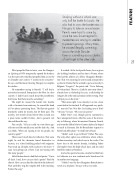
Studying without a school was only half the battle for Laszlo. He also had to cross the border into Hungary to take an annual exam. Permits were hard to come by, since the new Soviet regime fo- mented tension among its satellites to prevent uprisings. Many times, he crossed illegally, swimming across the wide Danube
River or scrambling across chunks of ice to get to the other side.
It worked. At the local parish house, he was given dry clothing, breakfast, and bus fare to Vienna, where Pius had the address of a fellow Hungarian Benedic- tine. That very morning, he arrived and announced to a priest in Vienna that he wanted to go to university in Belgium. “Forget it,” the priest said. “Go to Fribourg in Switzerland. There is a Catholic university there. I already have a scholarship for you, a scholarship for refugees. Be at the railroad station in the evening. They will put you on the train.”
“That same night I was already in a nice, clean, warm bed in Switzerland. It all happened very quick- ly,” marvels Pius. Was this God taking care of him? “Always,” he says. “My way was paved.”
Father Pius’s way, though paved, continued to have unexpected twists. After his years at the univer- sity in Fribourg, where he mastered German, French, and even the difficult Swiss-German dialect, he hoped to teach in Germany. But his Benedictine superior in Rome had other plans—to send him to Brazil.
“I didn’t want to go to Brazil,” Father Pius says. The only other option was California, where a Bene- dictine monastery and school was in the works. Pius knew four of the monks already, including Father Christopher from his high school days, and he could finish his studies at Stanford.
And so his quest to become a teacher led him here to California, to a new continent and a brand new life in another new language.
“I think I was the first Hungarian Benedictine to travel on a jet plane,” he says with a wry smile.
27
FEATURE


