


Page 17 - Priorities 6
P. 17
(1964), undergroundutilities(1961-2),andastate-of- the-art language laboratory (1966), plus improved tennis facilities and a full-size soccer field. Parent club activities provided the materials inside – library books, bleachers, audio-visual equipment, a transistorized speaker’s stand, a movie projector, and several items for the Chapel.
Second Decade
1967- 68
The student body included 108 High School students. Nine monks and 46 residents lived on the campus. Also on campus were eight young men studying to become Benedictines.
Tuition was $1,000 for day students, $2,800 for resident students.
Dress code was an olive green blazer or school sweater, black slacks, white shirt, and neckties in the correct class color. Boys purchased them at Jerahian’s Young Men’s Store in the Town and Country Village in Palo Alto. In the yearbook photos through this decade, hair was longer but relative to other schools Priory remained a structured, disciplined environment.
All students shared daily chores in the dining hall and classroom areas. The Chore Director and committee, all students, organized the tasks and reported to the Student Council.
In its annual Christmas message, the Benedictine community noted the progress of the eight men affiliated with the monastery but also noted the “declining vocations to the religious life” everywhere.
On the last day before Christmas break, families were invited to the Priory for a Christmas party, which became a tradition for many years.
1969-70
Archbishop Joseph T. McGucken blessed the new library, science complex and the new monastery. Dr. Edward Teller, the Nobel physicist renowned for his atomic discoveries, was the
guest speaker. The new monastery was only
delayed slightly by a high wind that knocked down a wall while the mortar was still soft!
1971
CroonerBingCrosbyandbaseball greatGaylordPerry were the keynote speakers at the dedication of the new Gym.
1972
The Parent Association held the first of 10 annual Mercedes Benz raffles. Tickets were $100 apiece.
1973
Dr. Otto von Hapsburg (Habsburg in Austrian), head of the Austrian House of Hapsburg, visited the Priory and was the honored guest at a gala, very large and formal dinner dance held Dec. 6 at the Fairmont Hotel. Born the first son of the Emperor of Austria-Hungary in 1912, he was exiled with his family to Spain when the king was deposed following World War1. He was educated in Spain by Hungarian Benedictine monks, and he knew several of the Priory monks.
1974
Cardinal Mindszenty of Hungary, held captive in his country by the Communists, was released and came to the United States. He visited Woodside Priory during graduation week. He addressed the students, attended graduation ceremonies, and celebrated a special Mass.
By the end of the second decade, added buildings include the third level science/computer & library complex and the new monastery.
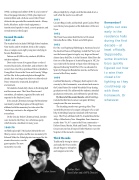
The founding monks were growing older. They wanted the presence of younger colleagues who could help in blending European standards with American ways. The Priory affiliated with St. Anselm Benedictine Abby of Manchester, New Hampshire. Four American monks from “St. A’s” came to the Priory community — Fathers Simon, Martin, Mark and Daniel. They were sent for just one year but all stayed. Father Martin is now the Superior of the monastic community.
Third Decade
Traditionally strong in science and math, the Priory in this decade began to strengthen and integrate arts in the
Remember?
Lights out was early in the residence halls during the first decade – at least officially. Supposedly, some inventive boys quickly figured out how to wire their closets for lighting so they could keep up with their homework. Or whatever.
Father Simon
Brother Mark
(now Father and a WPS Director)
13


