Page 9 - Be Healthy QC: Year One in Review
P. 9
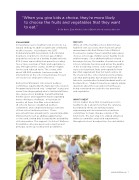
“When you give kids a choice, they’re more likely


to choose the fruits and vegetables that they want

to eat.”

– Colin Kave, East Moline School District food service director


CHALLENGE
RESULTS

Increasing access to healthy foods in schools is a While all of the Year One school districts have
natural strategy to address significant community had their own successes, there has been great

health concerns. According to the 2015 momentum in the East Moline School District.
Community Health Assessment, in Rock Island Food service leaders have found that when given

County, IL only 43.2 % of school-age children
choices, school-age children select healthy foods
and adolescents are at a healthy weight and only and beverages. Since adding healthy food and

67.2 % were reported by their parents as eating beverage choices, the number of meals served in
five or more servings of fruits and vegetables a school cafeterias has increased as has the quality

day. Throughout the county, 13,318 are eligible of the food being served. School-age students
for free and reduced lunch. The county, with enjoy selecting fresh fruits and vegetables from

about 146,000 residents, has been ready for bars that supplement their hot lunch entrée. At
interventions at the school level but was in need the check-out line, school lunch personnel make

of resources to dedicate to this issue.
sure that participants have balanced meals that
take into consideration federal standards and local

Before the PICH grant, school-level wellness best practices. Students have been eagerly asking
questions about the new options that they are
committees required by the National School Lunch
Program had achieved only “compliant” status and being served and are excited to try new fruits

weren’t meeting regularly due to limited staff time. and vegetables.
Also many school buildings found that limited

kitchen space and equipment made expanding
menu offerings a challenge. In less than six WHAT’S NEXT

months, all three Year One school districts School leaders know that increasing access to
(9 schools) have re-established wellness healthy foods is about more than the cafeteria.

committees and completed initial assessments Coordinated efforts are turning toward
of their school wellness policies. These empowering well-structured school wellness

assessments have already led to several immediate committees to make changes outside of the
improvements such as adding supplemental lunchroom. The next step is to embed enhanced

coolers and serving bars increasing the availability wellness committee goals and requirements
of fresh produce. The support of a School Wellness throughout school board policies for each district.

Coordinator, who was previously a teacher and
principal, opens up exciting new possibilities.


RESULTS


www.behealthyqc.org	9