


Page 42 - Mayrlife 2025 English
P. 42
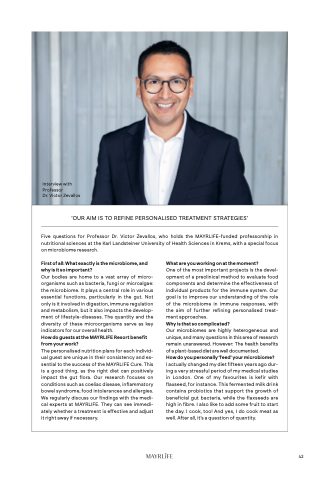
Interview with
Professor
Dr. Victor Zevallos
‘OUR AIM IS TO REFINE PERSONALISED TREATMENT STRATEGIES’
Five questions for Professor Dr. Victor Zevallos, who holds the MAYRLIFE-funded professorship in
nutritional sciences at the Karl Landsteiner University of Health Sciences in Krems, with a special focus
on microbiome research.
First of all: What exactly is the microbiome, and
why is it so important?
Our bodies are home to a vast array of micro-
organisms such as bacteria, fungi or microalgae:
the microbiome. It plays a central role in various
essential functions, particularly in the gut. Not
only is it involved in digestion, immune regulation
and metabolism, but it also impacts the develop-
ment of lifestyle-diseases. The quantity and the
diversity of these microorganisms serve as key
indicators for our overall health.
How do guests at the MAYRLIFE Resort benefit
from your work?
The personalised nutrition plans for each individ-
ual guest are unique in their consistency and es-
sential to the success of the MAYRLIFE Cure. This
is a good thing, as the right diet can positively
impact the gut flora. Our research focuses on
conditions such as coeliac disease, inflammatory
bowel syndrome, food intolerances and allergies.
We regularly discuss our findings with the medi-
cal experts at MAYRLIFE. They can see immedi-
ately whether a treatment is effective and adjust
it right away if necessary.
What are you working on at the moment?
One of the most important projects is the devel-
opment of a preclinical method to evaluate food
components and determine the effectiveness of
individual products for the immune system. Our
goal is to improve our understanding of the role
of the microbiome in immune responses, with
the aim of further refining personalised treat-
ment approaches.
Why is that so complicated?
Our microbiomes are highly heterogeneous and
unique, and many questions in this area of research
remain unanswered. However: The health benefits
of a plant-based diet are well documented.
How do you personally ‘feed’ your microbiome?
I actually changed my diet fifteen years ago dur-
ing a very stressful period of my medical studies
in London. One of my favourites is kefir with
flaxseed, for instance. This fermented milk drink
contains probiotics that support the growth of
beneficial gut bacteria, while the flaxseeds are
high in fibre. I also like to add some fruit to start
the day. I cook, too! And yes, I do cook meat as
well. After all, it’s a question of quantity.
42


