


Page 120 - Alex Ruscuklic - Complete Works
P. 120
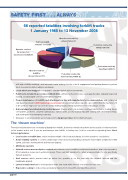
56 reported fatalities involving forklift trucks 1 January 1985 to 13 November 2008
Fell from forklift, forkarms or load (8)
Operator overcome by exhaust fumes (1)
Operator crushed by unexpected movement of forklift (7)
Pedestrian crushed by falling loads (15)
Pedestrian struck by travelling forklift (7)
Operator crushed forklift in tipover/rollover (11)
Pedestrian crushed by manoeuvering forklift (7)
with high visibility markings, and automatic trailer braking chocks or hook engagement and parking brakes to prevent truck movements while loading is underway;
• Loads which are strapped or wrapped to standard pallets before movement;
• Pallet racks installed in accordance with AS 4084 – with protective structures, load capacity signs, regularly inspected
racking, and damaged sections immediately repaired;
• Proper maintenance of forklifts and attachments in line with manufacturer’s recommendations and conducted only by professional forklift maintenance personnel whose formal service reports can confirm that the machine is fit to be used (or “tag it out” as not to be used pending repairs). Keep maintenance records always on site;
• Acknowledged and eliminated potential dangers (if any), which can include: overhead obstructions, loading trucks over gutters, potholes, unrated loading bays, narrow aisles, poorly maintained pallet racking with distorted footings, and inadequate housekeeping in general;
• Measures to ensure workers are not exposed to dangerous fumes from forklift exhausts. The ‘dream machine’
The major manufacturers are constantly updating their forklifts, but the fact remains that there are thousands of older machines on the market and in use. If you are purchasing a new forklift, or leasing one, look for a model incorporating these latest technology features:
• Load scales on forklift tines, which read the weight of the load and display it for the operator’s calculations;
• Active stability systems to control a wide range of functions (load handling, turning for mast height, weight, tilt, forklift
speed, yaw rate, steering wheel and rear tyre angles);
• ABS brake systems;
• Infrared or microwave workplace controls which limit access to forklifts to authorised operators, and control speeds or lift in hazardous zones (such as blind corners). These can limit operation to certain areas and tasks to only specifically trained operators;
• Seat sensors which prevent start up unless the operator is on the seat with the seatbelt latched and the handbrake applied;
• Lateral restraint devices to hold operators limbs and head within the roll over protective structure;
• Ergonomic seating to reduce musculoskeletal injuries from long shifts and repetitive actions;
SAFETY FIRST . . . ALWAYS
SAFETY FIRST . . . AL
page 14
W


