


Page 13 - Caribbean Reef Life Demo
P. 13
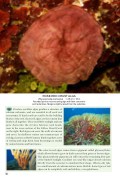
ROSE-RED CRUST ALGA (Peyssonnelia inamoena) < 45 cm / 18 in Rounded pink to red encrusting alga with faint concentric and radial lines. Margins slightly raised from the substrate.
Crustose coralline algae produce a structure of calcium carbonate, and are essential to all coral reef ecosystems. If hard corals are said to be the building blocks of the reef, these red algae are the cement that binds it all together. They need little sunlight and can grow down into the crevices between coral heads, seen in the cross section of the  ellow  encil Coral on the right. Red algae can cover the walls of canyons and caves. In shallower waters one common type of red alga, known as Reef Cement, binds together acres of reeftop and stops them from becoming too eroded by annual storms and hurricanes.
The color in red algae comes from a pigment called phycoerythrin, which allows them to grow in darker areas than green or brown algae. This photosynthetic pigment can still extract the remaining blue part of the limited sunlight. Coralline  or coral-like  algae absorb calcium directly from the seawater to maintain their shape. Others only take in a small amount of calcium and are more  exible. Some types of red algae can be completely soft and rubbery, even gelatinous.
30


