


Page 30 - Caribbean Reef Life Demo
P. 30
CORALS
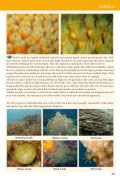
 ard corals are largely nocturnal animals that remain tightly closed up during the day, with their tentacles tucked safely away. It is at only night that divers can truly appreciate that these animals are actively feeding in the water column. This only explains a small part of their diet, however.
Within the tissues of each coral polyp there is a collection of tiny plant cells called zooxanthellae, which live in a symbiotic relationship with the coral. During the daylight hours this algae provides food and oxygen through photosynthesis. Corals get about 80  of their energy from these resident algae. This explains why coral reefs are found in areas with clear water and access to lots of sunlight.
When the coral is under stress from pollution or higher sea temperatures the coral can expel the algae from its tissues, called coral bleaching  p. 86 . The white color comes from the limestone skeleton now being visible through the polyps. This doesn’t always prove fatal for the reef; after the stresses have passed the algae can be reabsorbed into the  esh and growth can continue as normal.
 ighly sensitive ecosystems, coral reefs are under threat worldwide from rising sea temperatures and poor water  uality. An estimated 25  of the world’s coral reefs have already disappeared.
For the purposes of identi cation, the corals in this book have been roughly separated by both shape and species type into the following general categories:
Branching Corals  assi e  orals Flat Corals
Solitary Corals Black Corals Soft Corals
69


