


Page 15 - OAS Magazine Q2 Summer
P. 15
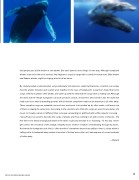
PHOTOS BY: DON HURZELER AND VANESSA MIGNON
15
that people put all the whales in one basket. But each species does things its own way. Although humpback whales seem to be the most musical, they happen to sing in a range that is suited for human ears. Blue whales and finback whales might be singing arias for all we know.
By studying whale communication using underwater microphones, called hydrophones, scientists can review how the whales’ behavior and sounds work together. In the case of humpbacks, researchers found that some songs seemed to attract other whales and came up with the idea that the songs were a mating call. Although the male and the female humpback can both produce sounds, researchers discovered it was the male that really cuts loose near its breeding grounds with 20-minute symphonies that can be heard up to 20 miles away. These complex songs are repeated over and over, and seem to be picked up by other males, until every one of them is singing the same tune. According to the scientists who think the songs are used to lure mates, the music isn’t really a whole lot different than some guy serenading his girlfriend with a little romantic crooning.
I myself have one word to describe the songs of whales and it has nothing to do with science or theories. The first time I ever heard a humpback whale in the wild I could only describe it as “haunting.” To this day, I never get used to the sensation of the strange, beautiful music of these creatures reverberating through my bones. And when the humpbacks are silent, I often wonder if somewhere beyond my ability to hear it, a blue whale is calling out in its trademark deep rumble to another of its kind across the cool, dark expanse of ocean hundreds of miles away.
— Wyland


