


Page 118 - Bespoke Issue
P. 118
 Last year over lunch in Porto we embarked on a project to build a race deck for Jenny to ride in the 2018 IDF downhill longboard world
championships. Admittedly there were a few bottles of wine involved and Architect and designer Nuno Rodrigus had sown the seed for the idea by creating his glorious wooden longboard cruisers.
As the idea gained traction I suggested we make a 3D scan of the existing board as the shapes and concaves all contribute to the control of the board, Jenny needed to change these to suit her riding style and to be able to place her feet around the deck to control the slides and moves.
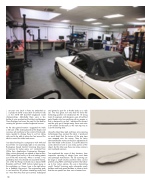
I set about looking for a company to work with and found them not surprisingly right on my doorstep. Bromsgrove based Central Scanning have been in business for twelve years, so I contacted Tom White their Applications Engineering Manager. After a short phonecall we agreed to meet at their 5000 square foot facility on a rural trading estate just off the M5 motorway. When I arrived, I was greeted by Tom who showed me around the facility, one of the  rst things I noticed was a classic MGB Roadster and Ford 100E Cortina tucked away in the workshops, so I knew I was in the right place for a Paddock Life project. The engineering geek in me loved the 3D printers chattering away and as I was there they had just scanned, redesigned
and printed a part for a throttle body on a rally car. This was great, not only had we found the technology partner we needed, but the 10 strong team of engineers and designers were all certi ed petrol heads who love anything with an engine or that is designed to go fast. I explained the project and the guys got it straight away, there were even a few skaters on the team, so the next step was to scan the existing deck.
Using the latest blue light and laser arm scanning technologies they scanned the deck, it produced so much detail that the texture of the grip tape was mapped onto the screen. Then as Jenny demonstrated the moves on the  oor adjustments to size were made on the screen. To scan the deck we used a bench set arm to scan every portion of the object, but for other uses there are rotary scanners and overhead scanners.
Tom explained the scope of their business, from inspection reporting to design from scan data and prototype manufacture. The 3D scanning can be large or small volumes and then items can be printed using FDM and Polyjet printers that allow up to four colour options, this was a fascinating world. Central Scanning works alongside coach builders and body panel builders to create a buck that the new panels are then cast or beaten from.
  118


