


Page 10 - Webster's Speller
P. 10
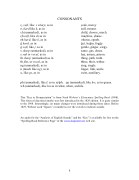
ç, soft, like s sharp, as in c, hard like k, as in
ch (unmarked), as in
çh soft, like sh as in
ch hard, like k, as in
ḡ hard, as in
ġ soft, like j, as in
s sharp (unmarked), as in s soft or vocal, as in
th sharp (unmarked) as in ŧh flat, or vocal, as in
ng (unmarked), as in
n (much like ng), as in
x, like gz, as in
ph (unmarked), like f: as in sylph.
çede, merçy
call, concur.
child, choose, much.
maçhine, çhaise. chorus, epoch.
ḡet, beḡin, fogḡy. ġentle, ġinġer, eleġy. same, gas, dense. has, amuse, prison. thing, path, truth. ŧhine, ŧheir, wiŧher. sing, single.
linger, link, uncle. exist, auxiliary.
CONSONANTS
qu (unmarked), like kw, as in queen. wh (unmarked), like hw as in what, when, awhile.
This “Key to Pronunciation” is from Noah Webster’s Elementary Spelling Book (1908). This form of diacritical marks was first introduced in the 1829 edition. It is quite similar to the 1908. Interestingly, no major changes were introduced during those dates. Before 1829, Webster used “figures” or numbers over the vowels to indicate sounds.
An audio for the “Analysis of English Sounds” and the “Key” is available for free on the “Spelling Book Reference Page” of the www.donpotter.net web site.
8


