


Page 117 - Demo
P. 117
Isaac and Jacob, by Jose de Ribera
12:32
Some of the religious authorities of Jesus’ day welcome his teaching. A scribe acknowledges Jesus’ teaching about the greatest commandment, love
of God and neighbor. And Jesus a rms the presence of the Holy Spirit in the man: “You are not far from the kingdom of God” (12:34).
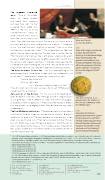
The Star of David, a six- pointed star, the symbol of the Jewish community since the Middle Ages
12:43
Jesus does not measure generosity by how much is given, but by how much is sacri ced. The poor widow has given more than all the others, because she has given “all she had” (12:44). Jesus asks not for a token gift, but for truly sacri cial giving.
* [12:1–12] The vineyard denotes Israel (Is 5:1–7). The tenant farmers are the religious leaders of Israel. God is the owner of the vineyard. His servants are his messengers, the prophets. The beloved son is Jesus (Mk 1:11; 9:7; Mt 3:17; 17:5; Lk 3:22; 9:35). The punishment of the tenants refers to the religious leaders, and the transfer of the vineyard to others refers to the people of the new Israel.
* [12:13–34] In the ensuing con icts (cf. also Mk 2:1–3:6) Jesus vanquishes his adversaries by his responses to their questions and reduces them to silence (Mk 12:34).
* [12:13–17] See note on Mt 22:15–22.
* [12:18–27] See note on Mt 22:23–33.
* [12:28–34] See note on Mt 22:34–40.
* [12:35–37] Jesus questions the claim of the scribes about the Davidic descent of the Messiah, not to deny it (Mt 1:1; Acts 2:20, 34;
Rom 1:3; 2 Tm 2:8) but to imply that he is more than this. His superiority derives from his transcendent origin, to which David himself
attested when he spoke of the Messiah with the name “Lord” (Ps 110:1). See also note on Mt 22:41–46.
* [12:38–40] See notes on Mk 7:1–23 and Mt 23:1–39.
* [12:41–44] See note on Lk 21:1–4.
a. [12:1–12] Mt 21:33–46; Lk 20:9–19.
b. [12:1] Is 5:1–7; Jer 2:21.
c. [12:10–11] Ps 118:22–23; Is 28:16.
d. [12:13–27] Mt 22:15–33; Lk 20:20–39. e. [12:13] 3:6.
f. [12:17] Rom 13:7.
g. [12:19] Dt 25:5.
h. [12:26] Ex 3:6.
i. [12:28–34] Mt 22:34–40; Lk 10:25–28.
j. [12:30] Dt 6:4–5.
k. [12:31] Lv 19:18; Rom 13:9; Gal 5:14; Jas 2:8. l. [12:33] Dt 6:4; Ps 40:7–9.
m. [12:34] Mt 22:46; Lk 20:40.
n. [12:35–37] Mt 22:41–45; Lk 20:41–44.
o. [12:36] Ps 110:1.
p. [12:38–40] Mt 23:1–7; Lk 11:43; 20:45–47. q. [12:41–44] Lk 21:1–4.
105
MARK
The Greatest Command-
ment.* 28One of the scribes,i
when he came forward
and heard them disputing
and saw how well he had
answered them, asked him,
“Which is the first of all the
commandments?” 29Jesus re-
plied, “The first is this: ‘Hear, O
Israel! The Lord our God is Lord
alone! 30You shall love the Lord your God with all your heart, with all your soul, with all your mind, and with all your strength.’j 31The second is this: ‘You shall love your neighbor as yourself.’ There is no other commandment greater than these.”k 32The scribe said to him,“Well said, teacher. You are right in saying, ‘He is One and there is no other than he.’ 33And ‘to love him with all your heart, with all your understanding, with all your strength, and to love your neighbor as yourself’ is worth more than all burnt offerings and sacrifices.”l 34And when Jesus saw that [he] answered with understanding, he said to him, “You are not far from the kingdom of God.” And no one dared to ask him any more questions.m The Question About David’s Son.* 35As Jesus was teaching in the temple area he said,n “How do the scribes claim that the Messiah is the son of David? 36David himself, inspired by the holy Spirit, said:
‘The Lord said to my lord, “Sit at my right hand
until I place your enemies under your feet.”’o 37David himself calls him ‘lord’; so how is he his son?” [The] great
crowd heard this with delight.
Denunciation of the Scribes.* 38In the course of his teaching he said,p “Beware of the scribes, who like to go around in long robes and accept greetings in the marketplaces, 39seats of honor in synagogues, and places of honor at banquets. 40They devour the houses of widows and, as a pretext, recite lengthy prayers. They will receive a very severe condemnation.”
The Poor Widow’s Contribution.* 41He sat down opposite the treasury and observed how the crowd put money into the treasury.q Many rich people put in large sums. 42A poor widow also came and put in two small coins worth a few cents. 43Calling his disciples to himself, he said to them, “Amen, I say to you, this poor widow put in more than all the other contributors to the treasury. 44For they have all contributed from their surplus wealth, but she, from her poverty, has contributed all she had, her whole livelihood.”


