


Page 13 - Demo
P. 13
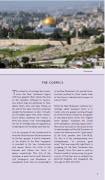
Jerusalem
The collection of writings that consti- tutes the New Testament begins with four gospels. Next comes the Acts of the Apostles, followed by twenty- one letters that are attributed to Paul, James, Peter, John, and Jude. Finally, at the end of the early church’s scriptures stands the Revelation to John. Virtually all Christians agree that these twenty- seven books constitute the “canon,” a term that means “rule” and designates the list of writings that are regarded as authoritative for Christian faith and life.
It is the purpose of this Introduction to describe those features that are common to the four gospels. A similar treatment of the letters of the New Testament is provided in the two Introductions that appear before the Letter to the Romans and before the Letter of James, respectively. The Acts of the Apostles, a work that is both historical and theological, and Revelation, an apocalyptic work, have no counterparts
in the New Testament; the special Intro- ductions prefixed to these books treat of the literary characteristics proper to each of them.
While the New Testament contains four writings called “gospels,” there is in reality only one gospel running through all of the Christian scriptures, the gospel of and about Jesus Christ. Our English word “gospel” translates the Greek term euangelion, meaning “good news.” This noun was used in the plural by the Greek translators of the Old Testament to render the Hebrew term for “good news” (2 Sm 4:10; possibly also 2 Sm 18:20, 25). But it is the corresponding verb euangelizomai, “to proclaim good news,” that was especially significant in preparing for the New Testament idea of “gospel,” since this term is used by Deutero-Isaiah of announcing the great victory of God that was to establish his universal kingship and inaugurate the new age (Is 40:9; 52:7; 61:1).
THE GOSPELS
1


