


Page 156 - Demo
P. 156
9:7 Herod Antipater, known as “Antipas,” was the son of Herod the Great, mentioned in Luke 1:5. The title “Tetrarch” means “ruler of one quarter,” and seems to allude to the fact that the kingdom of Herod the Great was at one time divided among his four sons.
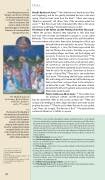
The Multiplication of the Loaves, Book of Hours of the Duc de Berry, early 15th century
9:13 The miracle of the feeding of the multitude in the wilderness is recounted in all four Gospels. It recalls Old Testament miracles, especially God’s feeding of the Israelites in the desert by sending them manna and quail (Exodus 16). It also looks forward to the Eucharist, when Jesus feeds his people with his body and blood.
d. [9:7–9] Mt 14:1–12; Mk 6:14–29.
e. [9:7–8] 9:19; Mt 16:14; Mk 8:28.
f. [9:9] 23:8.
g. [9:10–17] Mt 14:13–21; Mk 6:30–44; Jn 6:1–14. h. [9:13–17] 2 Kgs 4:42–44.
i. [9:16] 22:19; 24:30–31; Acts 2:42; 20:11; 27:35. j. [9:18–21] Mt 16:13–20; Mk 8:27–30.
k. [9:19] 9:7–8.
144
LUKE
Herod’s Opinion of Jesus.d 7* Herod the tetrarch* heard about all that was happening, and he was greatly perplexed because some were saying, “John has been raised from the dead”;e 8others were saying, “Elijah has appeared”; still others, “One of the ancient prophets has arisen.” 9* f But Herod said, “John I beheaded. Who then is this about whom I hear such things?” And he kept trying to see him.
The Return of the Twelve and the Feeding of the Five Thousand.g 10When the apostles returned, they explained to him what they had done. He took them and withdrew in private to a town called Bethsaida. 11The crowds, meanwhile, learned of this and followed him. He received them and spoke to them about the kingdom of God, and
he healed those who needed to be cured. 12As the day was drawing to a close, the Twelve approached him and said, “Dismiss the crowd so that they can go to the surrounding villages and farms and find lodging and provisions; for we are in a deserted place here.” 13h He said to them, “Give them some food yourselves.” They replied, “Five loaves and two fish are all we have, unless we ourselves go and buy food for all these people.” 14Now the men there numbered about five thousand. Then he said to his disciples, “Have them sit down in groups of [about] fifty.” 15They did so and made them all sit down. 16Then taking* the five loaves and the two fish, and looking up to heaven, he said the blessing over them, broke them, and gave them to the disciples to set before the crowd.i 17They all ate and were satisfied. And when the leftover fragments were picked up, they filled twelve wicker baskets.
Peter’s Confession About Jesus.* 18j Once when Jesus
was praying in solitude,* and the disciples were with him, he asked them, “Who do the crowds say that I am?” 19They said in reply, “John the Baptist; others, Elijah; still others, ‘One of the ancient prophets has arisen.’”k 20Then he said to them, “But who do you say that I am?” Peter said in reply, “The Messiah of God.”* 21He rebuked them and directed them not to tell this to anyone.
* [9:7–56] This section in which Luke gathers together incidents that focus on the identity of Jesus is introduced by a question that Herod is made to ask in this gospel: “Who then is this about whom I hear such things?”(Lk 9:9) In subsequent episodes, Luke reveals to the reader various answers to Herod’s question: Jesus is one in whom God’s power is present and who provides for the needs of God’s people (Lk 9:10–17); Peter declares Jesus to be “the Messiah of God” (Lk 9:18–21); Jesus says he is the su ering Son of Man (Lk 9:22, 43–45); Jesus is the Master to be followed, even to death (Lk 9:23–27); Jesus is God’s son, his Chosen One (Lk 9:28–36).
* [9:7] Herod the tetrarch: see note on Lk 3:1.
* [9:9] And he kept trying to see him: this indication of Herod’s interest in Jesus prepares
for Lk 13:31–33 and for Lk 23:8–12 where Herod’s curiosity about Jesus’ power to perform
miracles remains unsatis ed.
* [9:16] Then taking. . .: the actions of Jesus recall the institution of the Eucharist in Lk 22:19;
see also note on Mt 14:19.
* [9:18–22] This incident is based on Mk 8:27–33, but Luke has eliminated Peter’s refusal to
accept Jesus as su ering Son of Man (Mk 8:32) and the rebuke of Peter by Jesus (Mk 8:33). Elsewhere in the gospel, Luke softens the harsh portrait of Peter and the other apostles found in his Marcan source (cf. Lk 22:39–46, which similarly lacks a rebuke of Peter that occurs in the source, Mk 14:37–38).
* [9:18] When Jesus was praying in solitude: see note on Lk 3:21.
* [9:20] The Messiah of God: on the meaning of this title in rst-century Palestinian Judaism,
see notes on Lk 2:11 and on Mt 16:13–20 and Mk 8:27–30.


