


Page 311 - Demo
P. 311
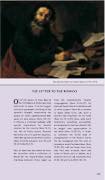
The Apostle Paul, by Claude Vignon (1793-1670)
THE LETTER TO THE ROMANS
Of all the letters of Paul, that to the Christians at Rome has long held pride of place. It is the longest
and most systematic unfolding of the apostle’s thought, expounding the gospel of God’s righteousness that saves all who believe (Rom 1:16–17); it reflects a universal outlook, with special implications for Israel’s relation to the church (Rom 9–11). Yet, like all Paul’s letters, Romans too arose out of a specific situation, when the apostle wrote from Greece, likely Corinth, between A.D. 56 and 58 (cf Acts 20:2–3).
Paul at that time was about to leave for Jerusalem with a collection of funds for the impoverished Jewish Christian believers there, taken up
from his predominantly Gentile congregations (Rom 15:25–27). He planned then to travel on to Rome and to enlist support there for a mission to Spain (Rom 15:24, 28). Such a journey had long been on his mind (Rom 1:9–13; 15:23). Now, with much missionary preaching successfully accomplished in the East (Rom 15:19), he sought new opportunities in the West (Rom 15:20–21), in order to complete the divine plan of evangelization in the Roman world. Yet he recognized that the visit to Jerusalem would be hazardous (Rom 15:30–32), and we know from Acts that Paul was arrested there and came to Rome only in chains, as a prisoner (Acts 21–28, especially Acts 21:30–33 and Acts 28:14, 30–31).
299


