


Page 330 - Demo
P. 330
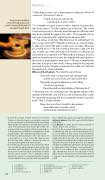
“Lord, you are our father; / we are the clay and you our potter: / we are all the work of your hand” (Isaiah 64:7).
* [9:14–18] The principle of divine election does not invite Christians to theoretical inquiry concerning the nonelected, nor does this principle mean that God is unfair in his dealings with humanity. The instruction concerning divine election is a part of the gospel and reveals that the gift of faith is the enactment of God’s mercy (Rom 9:16). God raised up Moses to display that mercy, and Pharaoh to display divine severity in punishing those who obstinately oppose their Creator.
* [9:18] The basic biblical principle is: those who will not see or hear shall not see or hear. On the other hand, the same God who thus makes stubborn or hardens the heart can reconstruct it through the work of the holy Spirit.
* [9:19–29] The apostle responds to the objection that if God rules over faith through the principle of divine election, God cannot then accuse unbelievers of sin (Rom 9:19). For Paul, this objection is in the last analysis a manifestation of human insolence, and his “answer” is less an explanation of God’s ways than the rejection of an argument that places humanity on a level with God. At the same time, Paul shows that God is
far less arbitrary than appearances suggest, for God endures with much patience (Rom 9:22) a person like the Pharaoh of the Exodus.
* [9:25] Beloved: in Semitic discourse means “preferred” or “favorite” (cf. Rom 9:13). See Hos 2:1.
* [9:30–33] In the conversion of the Gentiles and, by contrast, of relatively few Jews, the Old Testament prophecies are seen to be ful lled; cf. Rom 9:25–29. Israel feared that the doctrine of justi cation through faith would jeopardize the validity of the Mosaic law, and so they never reached their goal of righteousness that they had sought to attain through meticulous observance of the law (Rom 9:31). Since Gentiles, including especially Greeks and Romans, had a great regard for righteousness, Paul’s statement concerning Gentiles in Rom 9:30 is to be understood from a Jewish perspective: quite evidently they had not been interested in “God’s” righteousness, for it had not been revealed to them; but now in response to the proclamation of the gospel they respond in faith.
l. [9:14] Dt 32:4.
m. [9:15] Ex 33:19.
n. [9:16] Eph 2:8; Ti 3:5.
o. [9:17] Ex 9:16.
p. [9:18] 11:30–32; Ex 4:21; 7:3.
q. [9:19] 3:7; Wis 12:12.
r. [9:20–21] Wis 15:7; Is 29:16; 45:9; Jer 18:6. s. [9:22] 2:4; Wis 12:20–21; Jer 50:25.
t. [9:25] Hos 2:25.
u. [9:26] Hos 2:1.
v. [9:27–28] Is 10:22–23; Hos 2:1 / Rom 11:5 / Is 28:22.
w. [9:29] Is 1:9; Mt 10:15.
318
ROMANS
14* What then are we to say? Is there injustice on the part of God? Of course not!l 15For he says to Moses:
“I will show mercy to whom I will,
I will take pity on whom I will.”m
16So it depends not upon a person’s will or exertion, but upon God, who shows mercy.n 17For the scripture says to Pharaoh, “This is why I have raised you up, to show my power through you that my name may be proclaimed throughout the earth.”o 18Consequently, he has mercy upon whom he wills,p and he hardens whom he wills.*
19* You will say to me then, “Why [then] does he still nd fault? For who can oppose his will?”q 20But who indeed are you, a human being, to talk back to God?r Will what is made say to its maker, “Why have you created me so?” 21Or does not the potter have a right over the clay, to make out of the same lump one vessel for a noble purpose and another for an ignoble one? 22What if God, wishing to show his wrath and make known his power, has endured with much patience the vessels of wrath made for destruction?s 23This was to make known the riches of his glory to the vessels of mercy, which he has prepared previously for glory, 24namely, us whom he has called, not only from the Jews but also from the Gentiles.
Witness of the Prophets. 25As indeed he says in Hosea:
“Those who were not my people I will call ‘my people,’ and her who was not beloved* I will call ‘beloved.’t
26And in the very place where it was said to them,
‘You are not my people,’
there they shall be called children of the living God.”u
27v And Isaiah cries out concerning Israel, “Though the number of the Israelites were like the sand of the sea, only a remnant will be saved; 28for decisively and quickly will the Lord execute sentence upon the earth.” 29And as Isaiah predicted:
“Unless the Lord of hosts had left us descendants, we would have become like Sodom
and have been made like Gomorrah.”w


