


Page 377 - Demo
P. 377
* [16:19–24] These paragraphs conform to the normal epistolary conclusion, but their language is overlaid with liturgical coloration as well. The greetings of the Asian churches are probably to be read, along with the letter, in the liturgy at Corinth, and the union of the church is to be expressed by a holy kiss (1 Cor 16:19–20). Paul adds to this his own greeting (1 Cor 16:21) and blessings (1 Cor 16:23–24).
* [16:22] Accursed: literally, “anathema.” This expression (cf. 1 Cor 12:3) is a formula for exclusion from the community; it may imply here a call to self-examination before celebration of the Eucharist, in preparation for the Lord’s coming and judgment (cf. 1 Cor 11:17–34). Marana tha: an Aramaic expression, probably used in the early Christian liturgy. As understood here (“O Lord, come!”), it is a prayer for the early return of Christ. If the Aramaic words are divided di erently (Maran atha, “Our Lord has come”), it becomes a credal declaration. The former interpretation is supported by what appears to be a Greek equivalent of this acclamation in Rev 22:20 “Amen. Come, Lord Jesus!”
CORINTHIANS
10If Timothy comes, see that he is without fear in your company, for he is doing the work of the Lord just as I am.f 11Therefore, no one should disdain him. Rather, send him on his way in peace that he may come to me, for I am expecting him with the brothers. 12Now in regard to our brother Apollos, I urged him strongly to go to you with the brothers, but it was not at all his will that he go now. He will go when he has an opportunity.g
Exhortation and Greetings. 13Be on your guard, stand rm in the faith, be courageous, be strong. 14Your every act should be done with love.
15I urge you, brothers—you know that the household of Stephanash is the rstfruits of Achaia and that they have devoted themselves to the service of the holy ones— 16be subordinate to such people and to everyone who works and toils with them. 17I rejoice in the arrival of Stephanas, Fortunatus, and Achaicus, because they made up for your absence, 18for they refreshed my spirit as well as yours. So give recognition to such people.i
19* The churches of Asia send you greetings. Aquila and Prisca together with the church at their house send you many greetings in the Lord.j 20All the brothers greet you. Greet one another with a holy kiss.k
21I, Paul, write you this greeting in my own hand.l 22If anyone does not love the Lord, let him be accursed.* Marana tha.m 23The grace of the Lord Jesus be with you.n 24My love to all of you in Christ Jesus.
16:21
As was typical in the ancient world, Paul employed the services of a secretary for most of the letter but wrote the farewell with his own hand. He closes with a prayer in Aramaic, the language of Paul and of Jesus: Marana tha, “Lord, come!”
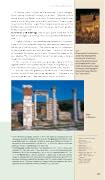
Ruins
in Ephesus
f. [16:10] 4:17; Acts 16:1; 19:22; Phil 2:19–23.
g. [16:12] 1:12; 3:4–6, 22; Acts 18:24–28.
h. [16:15] 1:16.
i. [16:18] 1 Thes 5:12–13.
j. [16:19] Acts 18:2, 18, 26;
Rom 16:3–5.
k. [16:20] Rom 16:16; 2 Cor 13:12;
1 Thes 5:26; 1 Pt 5:14.
l. [16:21] Gal 6:11; Col 4:18;
2 Thes 3:17.
m. [16:22] 12:3; Rom 9:3;
Gal 1:8–9; Rev 22:20.
n. [16:23] Rom 16:20.
365


