


Page 41 - Demo
P. 41
MATTHEW
111When Jesus finished giving these commands to his twelve disciples,* he went away from that place to teach and to preach
in their towns.
IV. OPPOSITION FROM ISRAEL
The Messengers from John the Baptist. 2* a When John heard in prison* of the works of the Messiah, he sent his disciples to him 3* with this question, “Are you the one who is to come, or should we look for another?” 4Jesus said to them in reply, “Go and tell John what you hear and see: 5* the blind regain their sight, the lame walk, lepers are cleansed, the deaf hear, the dead are raised, and the poor have the good news proclaimed to them.b 6And blessed is the one who takes no offense at me.”
Jesus’ Testimony to John.* 7As they were going off, Jesus began to speak to the crowds about John, “What did you go out to the desert to see? A reed swayed by the wind?c 8Then what did you go out to see? Someone dressed in fine clothing? Those who wear fine clothing are in royal palaces. 9Then why did you go out? To see a prophet?* Yes, I tell you, and more than a prophet. 10This is the one about whom it is written:
‘Behold, I am sending my messenger ahead of you; he will prepare your way before you.’d
11Amen, I say to you, among those born of women there has been none greater than John the Baptist; yet the least in the kingdom of heaven is greater than he.* 12From the days of John the Baptist until now, the kingdom of heaven suffers violence,* and the violent are taking it by force.e 13All the prophets and the law* prophesied up to the time of John. 14And if you are willing to accept it, he is Elijah, the one who is to come.f 15Whoever has ears ought to hear.
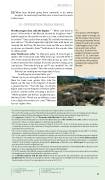
11:9
Jesus praises John the Baptist. He was a pillar of strength, not like the tall grass that is bowed by every passing wind. He was entirely focused on the coming of the kingdom of God. John was a great man, and yet, Jesus says, “the least in the kingdom of Heaven is greater than he” (11:11). John stands at the end of the old covenant; he is the last of the prophets, foretelling the coming of the Messiah.
* [11:1] The closing formula of the discourse refers back to the original addressees, the Twelve.
* [11:2–12:50] The narrative section of the third book deals with the growing opposition to Jesus. It is largely devoted to disputes
and attacks relating to faith and discipleship and thus contains much sayings-material, drawn in large part from Q.
* [11:2] In prison: see Mt 4:12; 14:1–12. The works of the Messiah: the deeds of Mt 8–9.
* [11:3] The question probably expresses a doubt of the Baptist that Jesus is the one who is to come (cf. Mal 3:1) because his
mission has not been one of ery judgment as John had expected (Mt 3:2).
* [11:5–6] Jesus’ response is taken from passages of Isaiah (Is 26:19; 29:18–19; 35:5–6; 61:1) that picture the time of salvation
as marked by deeds such as those that Jesus is doing. The beatitude is a warning to the Baptist not to disbelieve because his
expectations have not been met.
* [11:7–19] Jesus’ rebuke of John is counterbalanced by a reminder of the greatness of the Baptist’s function (Mt 11:7–15) that is
followed by a complaint about those who have heeded neither John nor Jesus (Mt 11:16–19).
* [11:9–10] In common Jewish belief there had been no prophecy in Israel since the last of the Old Testament prophets, Malachi.
The coming of a new prophet was eagerly awaited, and Jesus agrees that John was such. Yet he was more than a prophet, for he was the precursor of the one who would bring in the new and nal age. The Old Testament quotation is a combination of Mal 3:1; Ex 23:20 with the signi cant change that the before me of Malachi becomes before you. The messenger now precedes not God, as in the original, but Jesus.
* [11:11] John’s preeminent greatness lies in his function of announcing the imminence of the kingdom (Mt 3:1). But to be in the kingdom is so great a privilege that the least who has it is greater than the Baptist.
* [11:12] The meaning of this di cult saying is probably that the opponents of Jesus are trying to prevent people from accepting the kingdom and to snatch it away from those who have received it.
* [11:13] All the prophets and the law: Matthew inverts the usual order, “law and prophets,” and says that both have prophesied. This emphasis on the prophetic character of the law points to its ful llment in the teaching of Jesus and to the transitory nature of some of its commandments (see note on Mt 5:17–20).
a. [11:2–11] Lk 7:18–28.
b. [11:5] Is 26:19; 29:18–19; 35:5–6; 61:1.
c. [11:7] 3:3, 5.
d. [11:10] Ex 23:20; Mal 3:1; Mk 1:2; Lk 1:76. e. [11:12] Lk 16:16.
f. [11:14] 17:10–13; Mal 3:23; Lk 1:17.
29


