


Page 419 - Demo
P. 419
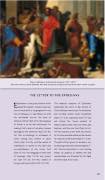
Paul in Ephesus, by Eustache Lesueur (1617-1657).
The new converts from Ephesus who had been practicing witchcraft burn their books in public.
THE LETTER TO THE EPHESIANS
Ephesians is the great Pauline letter about the church. It deals, however, not so much with a congregation in the city of Ephesus in Asia Minor as with the worldwide church, the head of which is Christ (Eph 4:15), the purpose of which is to be the instrument for making God’s plan of salvation known throughout the universe (Eph 3:9–10). Yet this ecclesiology is anchored in God’s saving love, shown in Jesus Christ (Eph 2:4–10), and the whole of redemption is rooted in the plan and accomplishment of the triune God (Eph 1:3–14). The language is often that of doxology (Eph 1:3–14) and prayer (cf. Eph 1:15–23; 3:14–19), indeed of liturgy and hymns (Eph 3:20–21; 5:14).
The majestic chapters of Ephesians emphasize the unity in the church of Christ that has come about for both Jews and Gentiles within God’s household (Eph 1:15–2:22, especially Eph 2:11–22) and indeed the “seven unities” of church, Spirit, hope; one Lord, faith, and baptism; and the one God (Eph 4:4–6). Yet the concern is not with the church for its own sake but rather as the means for mission in the world (Eph 3:1–4:24). The gifts Christ gives its members are to lead to growth and renewal (Eph 4:7– 24). Ethical admonition is not lacking either; all aspects of human life and relationships are illumined by the light of Christ (Eph 4:25–6:20).
407


