


Page 424 - Demo
P. 424
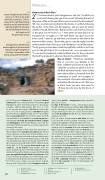
2:4 Sinners though we are, God has joined us to Christ in his death and in his resurrection. Christ is seated at the right hand of God, and thus we are seated at God’s right hand. Why? Not because we did anything to deserve it, but simply out of the generosity of God.
2:11 Through Christ, Gentiles have been brought into the household of God, no longer foreigners or outsiders, but members of the family, along with the Israelites.
EPHESIANS
2Generosity of God’s Plan.*
*1a You were dead in your transgressions and sins* 2in which you
*
once lived following the age of this world, following the ruler of
the power of the air, the spirit that is now at work in the disobedient.b 3All of us once lived among them in the desires of our esh, following the wishes of the esh and the impulses, and we were by nature children of wrath, like the rest.c 4But God, who is rich in mercy, because of the great love he had for us, 5d even when we were dead in our transgressions, brought us to life with Christ* (by grace you have been saved), 6raised us up with him, and seated us with him in the heavens in Christ Jesus,e 7that in the ages to come he might show the immeasurable riches of his grace in his kindness to us in Christ Jesus.f 8For by grace you have been saved through faith, and this is not from you; it is the gift of God;g 9it is not from works, so no one may boast.h 10For we are his handiwork, created in Christ Jesus for the good works that God has prepared in advance, that we should live in them.i
One in Christ.* 11Therefore, remember that at one time you, Gentiles in the esh, called the uncircumcision by those called the circumcision, which is done in the esh by human hands, 12were at that time without Christ, alienated from the community of Israel* and strangers to the covenants of promise, without hope and without God in the world.j 13But now in Christ Jesus you who once were far o have become near by the blood of Christ.k
* [2:1–22] The gospel of salvation (Eph 1:13) that God worked in Christ (Eph 1:20) is reiterated in terms of what God’s great love (Eph 2:4), expressed in Christ, means for us. The passage sometimes addresses you, Gentiles (Eph 2:1–2, 8, 11–13, 19, 22), but other times speaks of all of us who believe (Eph 2:3–7, 10, 14, 18). In urging people to remember their grim past when they were dead in sins (Eph 2:1–3, 11–12) and what they are now in Christ (Eph 2:4–10, 13), the author sees both Jew and Gentile reconciled with God, now one new person, a new humanity, one body, the household of God, a temple and dwelling place of God’s Spirit (Eph 2:15–16, 19–22). The presentation falls into two parts, the second stressing more the meaning for the church.
object you/us dead in. . .transgressions being repeated in
Eph 2:1, 5; cf. Col 2:13.
* [2:2] Age of this world: or “aeon,” a term found in gnostic
thought, possibly synonymous with the rulers of this world, but also re ecting the Jewish idea of “two ages,” this present evil age and “the age to come”; cf. 1 Cor 3:19; 5:10; 7:31; Gal 1:4; Ti 2:12. The disobedient: literally, “the sons of disobedience,” a Semitism as at Is 30:9.
*[2:5] Our relation through baptism with Christ, the risen Lord, is depicted in terms of realized eschatology, as already exaltation, though Eph 2:7 brings in the future aspect too.
* [2:11–22] The Gentiles lacked Israel’s messianic expectation, lacked the various covenants God made with Israel, lacked hope of salvation and knowledge of the true God (Eph 2:11– 12); but through Christ all these religious barriers between Jew and Gentile have been transcended (Eph 2:13–14) by the abolition of the Mosaic covenant-law (Eph 2:15) for the sake of uniting Jew and Gentile into a single religious community (Eph 2:15–16), imbued with the same holy Spirit and worshiping the same Father (Eph 2:18). The Gentiles are now included in God’s household (Eph 2:19) as it arises upon the foundation of apostles assisted by those endowed with the prophetic gift (Eph 3:5), the preachers of Christ (Eph 2:20; cf. 1 Cor 12:28). With Christ as the capstone (Eph 2:20; cf. Is 28:16; Mt 21:42), they are being built into the holy temple of God’s people where the divine presence dwells (Eph 2:21–22). [2:12] The community of Israel: or “commonwealth”; cf. Eph 4:18. The covenants: cf. Rom 9:4: with Abraham, with Moses, with David.
* [2:1–10] The recipients of Paul’s letter have experienced, in their redemption from transgressions and sins, the e ect of Christ’s supremacy over the power of the devil (Eph 2:1–2; cf. Eph 6:11–12), who rules not from the netherworld but from the
air between God in heaven and human beings on earth. Both Jew and Gentile have experienced, through Christ, God’s free
gift of salvation that already marks them for a future heavenly destiny (Eph 2:3–7). The language dead, raised us up, and seated us. . .in the heavens closely parallels Jesus’ own passion and Easter experience. The terms in Eph 2:8–9 describe salvation in the way Paul elsewhere speaks of justi cation: by grace, through faith, the gift of God, not from works; cf. Gal 2:16–21; Rom 3:24–28. Christians are a newly created people
in Christ, fashioned by God for a life of goodness (Eph 2:10). *
* [2:1–7] These verses comprise one long sentence in Greek, the main verb coming in Eph 2:5, God brought us to life, the
a. [2:1] Col 1:21; 2:13.
b. [2:2] 6:12; Jn 12:31; Col 1:13.
c. [2:3] Col 3:6–7.
d. [2:5] Rom 5:8; 6:13; Col 2:13.
e. [2:6] f. [2:7] g. [2:8] h. [2:9]
Rom 8:10–11; Phil 3:20; Col 2:12. 1:7.
Rom 3:24; Gal 2:16.
1 Cor 1:29.
i. [2:10] 4:24; Ti 2:14.
j. [2:12] Rom 9:4; Col 1:21, 27.
412


