


Page 447 - Demo
P. 447
COLOSSIANS
in the power of God, who raised him from the dead.i 13j And even when you were dead [in] transgressions and the uncircumcision of your esh, he brought you to life along with him, having forgiven us all our transgressions; 14* obliterating the bond against us, with its legal claims, which was opposed to us, he also removed it from our midst, nailing it to the cross;k 15despoiling the principalities and the powers, he made a public spectacle of them,l leading them away in triumph by it.*
Practices Contrary to Faith. 16m Let no one, then, pass judgment on you in matters of food and drink or with regard to a festival or new moon or sabbath.* 17These are shadows of things to come;
the reality belongs to Christ.n 18Let no one disqualify you,
delighting in self-abasement and worship of angels, taking his stand on visions,* in ated without reason by his eshly mind,o 19and not holding closely to the head, from whom the whole body, supported and held together by its ligaments and bonds, achieves the growth that comes from God.p
20If you died with Christ to the elemental powers of the
world, why do you submit to regulations as if you were
still living in the world? 21“Do not handle! Do not taste! Do not touch!” 22These are all things destined to perish with use; they accord with human precepts and teachings.q 23While they have a semblance of wisdom in rigor of devotion and self-abasement [and] severity to the body, they are of no value against grati cation of the esh.
2:13
What happens at baptism? We die with Christ, are buried with him, and are raised up again. Our sins are forgiven, the accusations against us nailed to the cross like the accusation against Jesus: “Jesus the Nazorean, the King of the Jews” (John 19:19).
2:16
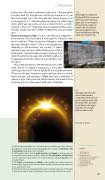
Paul urges the Colossians not to be distracted or confused by the diversity of practices and promises that the world o ers, but rather to hold rm to the simple truth they were taught, with its power to save.
Fotolia © avian
CHAPTER 2
i. [2:12] Rom 6:3–4.
j. [2:13] Eph 2:1, 5.
k. [2:14] Eph 2:14–15.
l. [2:15] 1:16, 20; 2 Cor 2:14; Eph 1:21.
m. [2:16] Rom 14:3–4; 1 Tm 4:3.
n. [2:17] Heb 8:5; 10:1.
o. [2:18] 2:23; Mt 24:4.
p. [2:19] Eph 2:21–22; 4:16.
q. [2:22] Is 29:13.
435
* [2:14] The elaborate metaphor here about how God canceled the legal claims against us through Christ’s cross depicts not Christ being nailed to the cross by men but the bond. . .with its legal claims being nailed to the cross by God.
* [2:15] The picture derives from the public spectacle and triumph of a Roman emperor’s victory parade, where captives marched in subjection. The principalities and the powers are here conquered, not reconciled (cf. Col 1:16, 20). An alternate rendering for by it (the cross) is “by him” (Christ).
* [2:16] Festival or new moon or sabbath: yearly, monthly, and weekly observances determined by religious powers associated with a calendar set by the heavenly bodies, sun, moon, and stars (cf. Col 2:8).
* [2:18] Ascetic practices encouraged by the false teachers included subjection of self humbly to their rules, worship of angels, and cultivation of visions, though exact details are unclear.


