


Page 248 - Candi Indonesia (Jawa)
P. 248
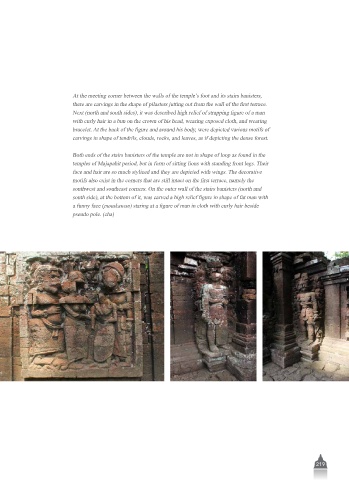
At the meeting corner between the walls of the temple’s foot and its stairs banisters,

                             WKHUH DUH FDUYLQJV LQ WKH VKDSH RI SLODVWHUV MXWWLQJ RXW IURP WKH ZDOO RI WKH ¿UVW WHUUDFH
                             1H[W  QRUWK DQG VRXWK VLGHV   LW ZDV GHVFULEHG KLJK UHOLHI RI VWUDSSLQJ ¿JXUH RI D PDQ
                             with curly hair in a bun on the crown of his head, wearing exposed cloth, and wearing
                             EUDFHOHW  $W WKH EDFN RI WKH ¿JXUH DQG DURXQG KLV ERG\  ZHUH GHSLFWHG YDULRXV PRWLIV RI
                             carvings in shape of tendrils, clouds, rocks, and leaves, as if depicting the dense forest.

                             Both ends of the stairs banisters of the temple are not in shape of loop as found in the
                             temples of Majapahit period, but in form of sitting lions with standing front legs. Their
                             IDFH DQG KDLU DUH VR PXFK VW\OL]HG DQG WKH\ DUH GHSLFWHG ZLWK ZLQJV  7KH GHFRUDWLYH
                             PRWLIV DOVR H[LVW LQ WKH FRUQHUV WKDW DUH VWLOO LQWDFW RQ WKH ¿UVW WHUUDFH  QDPHO\ WKH
                             southwest and southeast corners. On the outer wall of the stairs banisters (north and
                             VRXWK VLGH   DW WKH ERWWRP RI LW  ZDV FDUYHG D KLJK UHOLHI ¿JXUH LQ VKDSH RI IDW PDQ ZLWK
                             a funny face (punakawan  VWDULQJ DW D ¿JXUH RI PDQ LQ FORWK ZLWK FXUO\ KDLU EHVLGH
                             pseudo pole. (cha)


                                                                                                                            219

