


Page 30 - Advertising Annual 57
P. 30
CREATIVITY
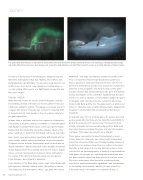
The game Never Alone features an atmospheric tundra where the spirit and natural worlds seamlessly intersect. All aesthetics, including character design and stylized illustrated cutscenes, were developed in conjunction with Alaska’s Cook Inlet Tribal Council to ensure an accurate depiction of Iñupiat culture.
for only one day because of its hefty $4,000 daily price tag and filmed the entire game in that day. “Katrina, the architect, had just graduated,” says Whittaker. “So we had to sneak back into her architecture school and do some cheeky laser cutting when no one was looking. When you’re on a tight budget, you go after any favors you can get.”
Never Alone
Dima Veryovka, former art director at the indie game company ELine Media, worked on firstperson shooter games for two and a half years, aiming for realism. “You always lose because you can’t compete with nature,” Veryovka says. Instead of competing with it, Veryovka and his team members chose to embrace nature for the game Never Alone.
In Never Alone, a girl, Nuna, and her fox companion collaborate to solve puzzles in the Arctic tundra. ELine Media cocreated the game with Alaska’s Cook Inlet Tribal Council, a service provider for Alaska Natives that also funded this interactive endeavor. Much of the game’s aesthetic is drawn from the Iñupiat culture, an Inuit tribe.
Never Alone’s seven game makers spent time with Iñupiat artisans and looked to cultural objects and artifacts for visual inspiration. The game used an inclusive development model to work with an Iñupiat committee—which included 36 elders, multiple storytellers and an Iñupiat writer—to accurately represent the culture. Iñupiat values—such as interdependence between nature and humans, the overlap of the spirit and material worlds, and intergenera tional dialogue—were integral to gameplay.
Some members of the Never Alone creative team visited Alaska and participated in culturally relevant events, like pulling in a whale. “The tundra has this atmospheric effect,” says game artist Casey
McDonnell, “this huge, vast flatness and these beautiful colors.” They conveyed this effect through desaturated pastel hues. Nuna’s appearance drew upon Iñupiat dolls made out of bone, baleen and animal hides, and the team ensured her costume was authentic to her geographic area. Early mockups of the game included a button that switched between the spirit and material worlds, but Iñupiats on the committee explained that the spirit world is not seen as separate, so ELine Media changed the game to integrate spirit characters into the real world, where they interact with Nuna and the Fox. The game team took photos and videos for reference, some of which they decided to integrate into the game in 26 unlockable mini documentaries that discuss Iñupiat life.
As Veryovka says, “It’s not a fantasy game. It’s a game about real people, people who live there, and we have this responsibility to portray these people in the proper way.” The response of the Iñupiat community has been exceptionally positive. McDonnell says elders have been playing the game, and one tribe member told them, “This makes me proud to be an Iñupiat.”
These games represent but a few of indie gaming’s success stories. Even just a few years ago, creators with independent interactive visions had little hope of finding funding, a means of production or an audience. Now there are endless niche games that offer a wide range of stories and illustration styles—from oldschool 16bit pixelated graphics to lifelike 3D representations. Indie games increasingly are competing with mainstream titles, and their aesthetic styles help them stand out from the crowd. The rise in indie games offers the world a diversity of play experiences with transformative capabilities—and opportunities for fascinating entertainment, whether you find yourself on
a deserted island, in the tundra or in a fantastical city. ca
32 Advertising Annual 2016


