


Page 13 - Monocle Quarterly Journal Vol 3 Issue 2 Spring
P. 13
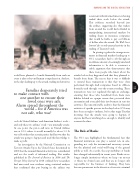
Families desperately tried to make contact with
one another to ensure their loved ones were safe.
Alarm spread throughout the world – for if America was
not safe, who was?
on both United Airlines’ and American Airlines’ stock – and only these two airlines’ stock – was unusually erratic. At one point, the put-to-call ratio in United Airlines was at 12:1, where it would normally be about 1:1. It was self-evident that certain parties had known that the attack was going to happen and used this knowledge to make a profit.
An investigation by the National Commission on Terrorist Attacks Upon the United States determined in 2003 that the unusual financial activity was coincidental and not the result of informed trading. But articles published in The Journal of Business in 2006 and The Foreign Policy Journal in 2010 outlined how researchers had uncovered new evidence using statistical analyses that confirmed that put buying in the airlines was
BANKING AND THE DIGITAL REVOLUTION
  could have planned to benefit financially from such an event is almost beyond human comprehension. And yet, in the days leading up to the attack, trading in derivatives
consistent with informed investors having traded their stock before the attack. This evidence stretched beyond just the airlines, suggesting also that traders from around the world had colluded in manipulating international markets by trading shares in insurance companies that would be liable to pay out billions of dollars after the attack. The Wall Street Journal also noted unusual activity in the trading of Treasury bonds.
In piecing together the strange move- ments in financial markets leading up to 9/11, researchers had to sift through an inordinate amount of seemingly unrelated information to be able to construct a stable argument that demonstrates that there were people who knew about the
attacks before they happened and that they planned to benefit from them. The reason that it was so difficult to unravel these transactions is that they were often performed through shell companies based in offshore domiciles and through over-the-counter trading. These transactions were not regulated through an exchange, ensuring that those who benefitted from them were hidden behind an opaque screen that protected their anonymity and concealed their involvement in terrorist activities. The uncomfortable reality is that the financial activities of specific persons in the days before 9/11 may have been enough to indicate, before that tragic Tuesday morning, that the attacks were going to happen, if anyone had been watching close enough to identify and connect the clues.
The Role of Banks
The 9/11 case highlighted the fundamental fact that financial institutions can play a central role in safe- guarding not only the international monetary system, but the physical and social well-being of the general public as well. As a result, the responsibilities of banks have changed substantially in recent years. Banks are no longer simply institutions where we keep our money or where we obtain loans, and they are no longer only responsible for the business of banking. They have become paramount in the detection of terrorist, criminal
 11


