


Page 18 - Monocle Quarterly Journal Vol 3 Issue 2 Spring
P. 18
MONOCLE QUARTERLY JOURNAL | DEEP LEARNING
  1.3
THE HISTORY AND SCIENCE OF ARTIFICIAL INTELLIGENCE
We say that necessity is the mother of invention, and that certainly was the case at Bletchley Park between 1942 and 1944, as the secret headquarters of British codebreakers during the Second World War. As depicted in the 2014 historical drama The Imitation Game, we see Benedict Cumberbatch play the role of Alan Turing, one of the most brilliant mathematicians and cryptanalysts of
his time. Turing, along with a crack team of codebreakers, was tasked by the British military with deciphering the unbreakable Nazi code encrypted by the infamous Enigma machine. Whilst thousands of Allied soldiers and civilians died by virtue of the secret messages and co-ordinates sent to German U-boats and the Luftwaffe via Enigma, Turing and his team had to race against time to come up with a solution.
Within just a few weeks of working on the Enigma code, Turing had radically altered the course of the military’s efforts. The plan he proposed was to make use of a cryptanalytic machine that could help break the German cypher. Whilst in the film it is insinuated that Turing and his team conceptualised and built the machine from scratch, it was in fact modelled on a Polish machine called the Bomba – albeit with some very important alterations insisted upon by Turing. This code-breaking machine was named the Bombe – as a nod to its predecessor and because of the ominous ticking sound made by the dozens of indicator drums continuously testing possible outcomes – and it would significantly change the course of history.
With the help of this electromagnetic cryptanalyst machine that effectively automated and optimised the trial of different possibilities in the code-breaking process, Turing and his team managed to crack the previously unbreakable Enigma code. Many historians argue that this breakthrough was critical for the Allies to eventually go on to win the war, with hundreds of intercepted German messages being decoded to give their forces a distinctive strategic advantage going into battle. After the war, Turing made great strides in advancing early computing developments, and to this day, many call him the father of modern computing.
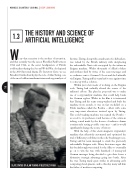
   SLATE STATUE OF ALAN TURING AT BLETCHLEY PARK
16


