


Page 38 - DiVin022017
P. 38
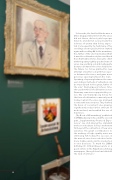
Scheurebe, the  rst  eld trials were a bitter disappointment for him. The vines did not thrive, did not yield a proper harvest, and did not even provide the richness of aroma that Scheu expec- ted. Consequently, he had many of his seedlings destroyed, but then started again with seedling 88. In the meantime, the „father of the vine“ had realised that it was the cultivation styles used back then that had led to his „favourite child“ withering away: tightly-packed rows of vines, low-yielding soil and inadequate distance between the vines had led to the failure. So, Scheu planted his new attempt on better soil, with more spa- ce between the vines, and gave more generous spacing between the rows. Speaking of spacing between the rows: even today‘s methods of cultivation can be traced back to the great „father of the vine“. During Georg Scheu‘s time, the usual method of cultivation across Germany saw vines supported by ca- nes. We can thank Georg Scheu for the form of cultivation commonly used today, in which the vines are arranged in rows with tension wires. They formed the basis of consistent vine growing, signi cantly reduced the amount of work involved, and enabled the use of machines.
„My Book of Winemaking“, published in 1950 by Georg Scheu, and the second part, „Supplementary Practical Expe- rience“, are still among the standard works on viticulture. Scheu‘s work went far beyond the cultivation of new vine varieties. His great contributions to the making of high-quality wine are still being felt today. His success in the area of vine clone selection led to more stable yields, and to a reduction in vine diseases. To mark his 130th birthday, Dr. Otmar Bauer wrote in a guest article in the Allgemeine Zeitung newspaper: „Georg Scheu has killed off the lack of vintners.“
38


