


Page 24 - SFC - V15
P. 24
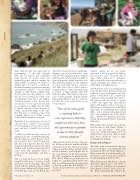
Slide ranch provides four main areas of programming: (1) day and overnight  eld trips for schools and community youth groups; (2) special events and weekend programs aimed at engaging the whole family; (3) summer day camps for children ages 5–14; and (4) a Teacher-in- Residence internship program for emerging environmental educators. On any given weekday at Slide Ranch, walking down the dirt path from the parking lot, you’ll hear the rooster crowing, the sound of the sea humming on the breeze, and children chattering excitedly as they discover their next project. As you approach the farm on a weekend, you might hear the bustle of families enjoying a sheep shearing, see toddlers squeal with delight as they meet their  rst goat, or smell the aromas from a camp re dinner at one of their seasonal events, family programs or campouts.
Regardless of age or group type, one area of education that is central to every program is food--learning about food from seed to meal, and how it bene ts the body and mind.
“A child once asked me why we keep our radishes in the dirt,” said Marika Bergsund, Executive Director at Slide Ranch. “It took me by surprise, but it wasn’t the  rst time kids have asked questions like this.  ese moments really hit home the fact that many children today don’t know where their food comes from—they genuinely believe it comes from the supermarket, and that’s a problem.”
Tiny tots learn the basics of food origins, using all of their senses to touch, see, smell and taste food from the garden.  ey make friends with the animals and love feeding the free-range chickens and holding a warm, newly-laid egg. A day at Slide Ranch gives
older kids structured lessons in gardening, planting crops and growing herbs, along with lots of food preparation and cooking to help them discover the richness and  avors from homegrown, freshly harvested food.  ey milk the friendly goats (the warmness of actual fresh milk surprises everyone!) and make fresh cheese; thresh, winnow and grind wheat to make homemade pizza or pretzels; or make vegetable sushi fresh from the garden.  e farm’s bee hives are part of many programs, helping students understand pollinators and the enormous role that these tiny creatures have in our food production.
“One of our main goals is exposing kids to new experiences that they might not otherwise have the opportunity to partake in due to their family’s current situation.”
“ is trip had to be the best day of my son’s life. He has special needs, and this trip didn’t restrict him in any way...[he] got to interact with goats and their babies, pet baby chicks and feed chickens, watch dolphins dive in the ocean while he ate his lunch and then [he tried] everything in the garden that Ben Bear o ered. When we got home my son begged for a vegetable garden and we now have our seedlings planted—he cannot wait to have his garden like Slide Ranch’s!” — Teacher and parent from a San Francisco pre-school.
Summer campers get an even deeper experience, as food ecology and food history are woven into each of their  ve days of camp. Older campers get to participate fully in ranch life, practicing principles of organic gardening and animal care, and undertaking stewardship projects.
Slide Ranch also serves as a teaching ground for people who want to learn about food and farming for career development. One such partner is Old Skool Café, a faith-based, violence prevention program that trains at- risk, urban youth, ages 16-22, to operate a 1940’s style supper club.  e youth-led supper club employs youth in every area of the business as paid apprentices, which then helps them in transforming their learned skills – such as restaurant management and chef – into permanent jobs in the market place. Old Skool’s apprentices spent time at Slide experiencing the farm to restaurant table cycle.
When asked what activities were relevant from his time at Slide Ranch, Charles, a server at the café relayed “...[we] made cheese out of milk and vinegar, and I was surprised how easy it was. And we made pizza from scratch—it’s crazy to make something from nothing.”
Background and Impact
 e birth of this environmental education project was thanks to a fascinating and truly monumental e ort by Doug Ferguson, a Marin activist who was fundamental in the movement to protect open spaces in Marin County beginning in the late 1950s.
When Doug spotted Slide Ranch, a former dairy farm dating back to the 1870s, it was owned by a Hollywood screenwriter who planned to build a hotel on the site. But Doug wholeheartedly believed the
22 www.sanfranciscocuisine.com
TThheePPreremieierrCCuulilninaaryryGuuidideetotoFFinineeRReestsatauuraranntstsaannddWinineerireiess SSaannFFrraannccisicscooCCuuisiisnineeVVoolulumeeXXIV
Slide Ranch


