


Page 19 - bne_May magazine 2023_20230503 BRICS
P. 19
bne May 2023 Companies & Markets I 19
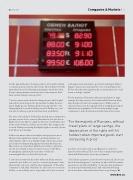
For the typical Russian, the depreciation of the ruble is likely to remain unnoticed in the short term. Those likely to feel the immediate hit are the Russians planning to travel abroad in the upcoming summer vacation period, who may see their hard-earned savings come up short.
“I’m not very worried about the change in rate, but I’m glad I already booked and paid for my summer holiday, because prices might go up,” Svetlana Rodionova, 43, told bne. “I’m taking my kids to an all-inclusive resort in Turkey, so a cost increase for three people would have been prohibitive.”
The price of a holiday to Turkey has already risen compared to pre-war, in part due to currency fluctuations, but also due to higher fuel costs. Due to a large no-fly zone over Ukraine and in the south of Russia, airlines are forced to fly a longer route to reach Turkey, increasing the flight length to around 5 hours from Moscow to Antalya.
In Moscow, where salaries are higher and people are more likely to have significant savings, a growing number are exploring the option of opening foreign currency accounts as a means of safeguarding against currency fluctuations. Muscovites, in comparison with the rest of the country, are also far more likely to want to travel or move to the West, meaning that any fluctuation in value could have
a meaningful effect on their life decisions.
“I saw on the news that the ruble will most likely settle at around 80 per dollar, so I’ve yet to convert my money,” Ivan Shevchenko, a 26-year-old IT worker, explained. “If the ruble continues to fall, then I will have no choice but to convert to dollars, or more likely euros, especially as I’ve just received
a Schengen visa and want to go trade travelling in Italy in August. Sanctions mean that the cost of travelling to the EU has already risen significantly, so any further rise could mean a change of plans.”
For the majority of Russians, without travel plans or large savings, the depreciation of the ruble will hit hardest when imported goods start increasing in price. While years of sanctions have seen the rapid growth of a significant import substitution programme, the decision by many foreign companies to leave the Russian market means that some
“For the majority of Russians, without travel plans or large savings, the depreciation of the ruble will hit hardest when imported goods start increasing in price”
products, such as Coca-Cola and Guinness, need to be imported from abroad. The cost of this complicated logistics chain will ultimately be borne by consumers.
“I don’t have a passport, I have never been abroad, I don’t care about the exchange rate,” a woman, 54, who asked to remain anonymous, told bne IntelliNews. “I own my own apartment, so have no problems with rent. I will only start worrying about the value of the ruble when I have to go hungry.”
www.bne.eu


