


Page 102 - teachers.PDF
P. 102
1. Studentswhogetskeletalkindsofnotestakeabouthalfasmanynotesoftheir own, compared to students who are not given notes; yet, students who are given skeletal notes recall more.
2. Theamountofspaceleftfornote-takingisastronginfluenceontheamountof notes that students take (i.e., the more space provided, the more notes taken).
3. Although skeletal notes lead to better recall than either the student's own notes or the instructor's notes, the best recall occurred when students received skeletal notes before the lecture and the instructor's detailed notes afterward. (Note the similarity between this finding and that in Kiewra's 1985 study.)
Given the opportunities for analysis and synthesis when one has access to both sets of notes in this way, this result is to be expected.
Ideally, then, instructors would be advised to provide both skeletal notes before the lecture and detailed notes afterward in order to afford their students the maximum benefits. But the disadvantages associated with detailed notes have been discussed above, and given these, it seems unlikely that many educators would choose this option. Certainly, there are also those who would disagree in principle with provision of notes as a remedy for students' difficulties. Instead, it is entirely arguable that emphasis should be placed on helping students improve the quality of their own notes.
HOW CAN STUDENTS' OWN NOTES BE IMPROVED?
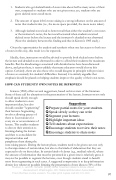
Kiewra (1985) offers several suggestions, based on his review of the literature. Some of these call for alterations in the presentation of the lecture. Instructors not only should speak slowly enough
to allow students to note
important ideas, but also
should consider "segmenting"
their lectures. Segmenting
involves allowing pauses of
three to four minutes for
every six or seven minutes of
lecture. This enables students
to devote their attention to
listening during the lecture
and then to consolidate the
important ideas and
paraphrase them during the
note-taking pauses. During the lecture phase, students need to be given cues not only to the importance of certain ideas, but also to the kinds of elaboration that they are expected to do on these ideas. In certain kinds of classes (e.g., medical school), where the amount of information that must be presented in a given time is relatively great, it may not be possible to segment the lectures, even though students stand to benefit most from segmenting in such cases. A suggested compromise is to keep information
density low whenever possible (limiting the presentation of new ideas to 50% of the
Rudner, L. and W. Schafer (2002) What Teachers Need to Know About Assessment. Washington, DC: National Education Association.
From the free on-line version. To order print copies call 800 229-4200
97
Suggestions
QPrepare partial notes for your students. QSpeak slowly so they can write QSegment your lectures
QHighlight important ideas
QTell students about expectations QEncourage students to review their notes QEncourage students to share notes


