


Page 97 - teachers.PDF
P. 97
WHAT TYPES OF WORDING SHOULD TEACHERS INCLUDE IN THEIR COMMENTS?
The use of specific comments encourages positive communication between teachers, parents, and students. Written in a positive and informative manner, comments can address a variety of issues while maintaining the while still maintaining the dignity of the child. This is especially important if a child has had difficulty with a particular subject area or controlling his/her behavior over an extended period of time.
Shafer (1997) compiled a list of "effective" comments from a variety of teachers. The following lists of words and phrases are just a sampling from her publication "Writing Effective Report Card Comments" (p. 42-43).
WORDS AND PHRASES THAT TEACHERS SHOULD BE CAUTIOUS OF USING
When teachers write comments on report cards, they need to be cognizant of the fact that each child has a different rate of social and academic development. Therefore, comments should not portray a child's ability as fixed and permanent (Shafer, 1997). Such comments do not offer any reason to believe that the child will be successful if he/she attempts to improve.
Also, teachers must be sensitive to the fact that their
students will read their comments. If negative comments
are made, teachers must be aware that those comments
may be counterproductive. In addition to the previously
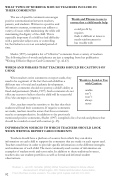
mentioned positive comments, Shafer (1997) compiled a list of words and phrases that should be avoided or used with caution (p. 45).
INFORMATION SOURCES TO WHICH TEACHERS SHOULD LOOK WHEN WRITING REPORT CARD COMMENTS
Teachers should have a plethora of sources from which they can derive information on each child to support the comments that are made on each report card. Teachers need these in order to provide specific information on the different strengths and weaknesses of each child. The most commonly used sources of information are examples of student work and test results. In addition to these traditional sources, teachers also use student portfolios as well as formal and informal student observations.
Rudner, L. and W. Schafer (2002) What Teachers Need to Know About Assessment. Washington, DC: National Education Association.
From the free on-line version. To order print copies call 800 229-4200
Words and Phrases to use to convey that a child needs help
could profit by
requires
finds it difficult at times to needs reinforcement in has trouble with
Words to Avoid or Use with Caution
unable can’’t won’’t always never
92


