Page 34 - Applied Diamond Brochure 2015
P. 34
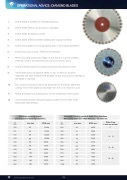
OPERATIONAL ADVICE: DIAMOND BLADES
1. Check blade is suitable for material being cut.
2. Check blade shaft is not grooved or damaged.
3. Check blade fits tightly on shaft.
4. Check blade shaft and wheel bearings are in good condition.
5. Check clamp plates are not damaged, dirty or of unequal diameters.
6. Ensure drive pin is used, if fitted to the machine.
7. When mounting a part worn blade, check that it is in good condition, free from cracks, and that the bore hole is not out of round.
8. Check that the blade is mounted correctly for the direction of cut.
9. If the blade slows excessively whilst in use, re-dress in abrasive materials. DO NOT FORCE THE BLADE, as this may result in damage to the blade or machine.
10. Do not allow excessive heat to be generated on the blade. When dry cutting, remove the blade occasionally from the cut to allow it to cool.
11. Check the blade is operating at the correct speed (see chart below).
12. If wet cutting, ensure adequate supply of water to both sides of the
blade (see chart below).
Maximum operating speeds Maximum operating speeds & Water Flow guidelines Dry Cutting with Hand-held machines Wet Cutting with Floor / Wall / Masonry / Tile Saws etc
o mm
m/s max
RPM max
100
80
15300
115
80
13300
125
80
12250
150
80
10200
180
80
8500
200
80
7650
230
80
6650
300
100
6400
350
100
5500
400
100
4800
450
100
4250
o mm
m/s max
RPM max
Water Flow Litres per minute
250
63
4850
6
300
63
4050
10 - 15
350
63
3450
400
63
3050
450
63
2700
500
63
2450
15 - 25
600
63
2050
750
63
1650
30 - 50
800
63
1550
900
63
1350
1000
63
1250
www.applieddiamond.com 32