


Page 17 - post metabolism
P. 17
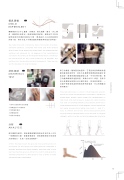
模具實驗 MOLD EXPERIMENT
踝關節部分以手工量產,步驟為:軟化纖維、膠合、夾上模 具、靜置兩天後取出。經過無數的測試後,歸納出竹子在所 設想曲度內回彈的角度為10度,模具設計上以此將曲線向 內縮十度,將竹片放入木模加壓後將能取得所設計的角度。
We make the part of ankle by hand. First soften the fiber, laminate bamboo, compress the mold and then release after 2 days. After testing for many times, we inference that bamboo will rebound for 10 degrees in the hypothetical curvature. According to the experimental results, we design the wood mold for the curve inward by 10 degrees. Put bamboo into the wood mold and compress it. Then we can get the degrees of original design.
材料測試 MATERIALS TEST
1.用PCL線材列印片狀模型 2.將模型放入60度熱水 3.等待模型軟化 4.將模型塑形 5.等待冷卻固定
分析 ANALYSIS
聚己內酯是一種熱塑性的塑料,它有些特性與傳統的塑 膠有著相反的特性,首先大多數塑料需要高熱高壓才成 能成型、需要昂貴的鋼製塑型工具、不可生物分解;聚 己內酯熔點較其他塑料低,熔點介於58-60度,這表示 從水壺裡倒出的熱水足以讓它熔化,容易伸拉塑形,一 旦變冷恢復到室溫則恢復成原有的強度,可以用機器切 削和鑽切。
Polycaprolactones is a kind of thermoplastic plastic, which has some characteristics reversed to traditional plastic.Most plastic mold under the requirement of high heat and high pressure, expensive steel molding tool and un-biodegradable; polycaprolactones has a lower melting point of 58-60 degrees, which means the hot water poured from kettle can melt it , and it’s easy to stretch and mold. Once polycaprolactones touches indoor temperature, it can recover to original strength, which can be cut and chopped by machine.
Weight the reacting force of first touch on the ground of heal
首先腳跟先著地,初始腳跟碰觸地面的反作用力給人大於 一倍體重的力量,接著腳掌著地,最後腳姆指給於地面最 大的推進力,完成一次的走路動作。
At first, the feet touch the ground, the reacting force of first touch on the ground of heal give the amputee a strength double than body weight, then the sole of the feet touches the ground. At last, the foot thumb gives the maximal propulsion to the ground, and a series of walk movement has completed.
the foot thumb gives the
1 2 3 4 5
maximal propulsion
Time
16
0
150
300
10°
10°
BAMBOODIA
2 times 1 time


