


Page 6 - Demo
P. 6
NEWS BRIEFS
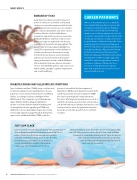
BEWARE OF TICKS
Australians have been warned to beware of tick-borne illnesses in summer as they head outdoors to enjoy the warmer months. People planning overseas travel are also encouraged to be cautious during hikes and other outdoor activities. Director of the Karl McManus Foundation and infectious disease researcher Dr Mualla McManus said that confusion and mixed messages around tick-borne diseases could distract people from being vigilant. ‘The recent Federal Senate inquiry highlighted a range of competing views on the definitions of tick-borne diseases. However the reality
is that tick-borne diseases exist in Australia
and ticks are more prevalent in the warmer spring and summer months,’ said Dr McManus. Left untreated, tick-borne disease can lead to chronic and debilitating illness and cause issues with mobility, eyesight, cognitive impairment and overall wellbeing.
CAREER PATHWAYS
Almost 1,700 pharmacists across Australia have identified their preferred career paths using PSA’s industry-first Career Pathways portal. The user-friendly Career Pathways member service allows pharmacists to focus on specific career paths using a tailored suite of education and practice support resources to guide them on defined career paths. Since launching the first five Career Pathways at PSA16 in July, the most popular pathway has been General Practice Pharmacist followed by Professional Services Pharmacist and Pharmacist Manager. PSA National President Joe Demarte said PSA strongly supported Australia’s community pharmacy network, and Career Pathways offered education resources to help pharmacists expand
their skills in pharmacies and also to move beyond traditional roles
DIABETES DRUGS MAY ALLEVIATE AD SYMPTOMS
Type 2 diabetes mellitus (T2DM) drugs could be used to alleviate symptoms among Alzheimer’s disease patients, or even exert potential disease-modifying effects, according to business intelligence firm
GBI Research. The company’s report Repurposing Type 2 Diabetes Mellitus Drugs for Alzheimer’s Disease concludes that the linked underlying role of dysregulated insulin signalling in T2DM and Alzheimer’s disease pathophysiology is becoming increasingly apparent, suggesting that therapeutic approaches established within T2DM could also
SLIP SLOP SLACK
Cancer Council research released during National Skin Cancer Action Week showed fewer Australians were using hats to protect themselves from the sun and were getting
sunburnt on their face, head, nose or ears. The data
from Cancer Council’s National Sun Protection Survey revealed that only 44% of Australian adults wear a hat when exposed to UV on
prove to be beneficial for the treatment of Alzheimer’s. GBI Research Analyst Fiona Chisholm said the part insulin resistance played in T2DM was clear, but it might also impact the brain. Processes affecting learning and memory, such as dendritic sprouting, neuronal stem cell activation, cell growth and repair, synaptic maintenance, and neuroprotection, were all regulated in the brain by insulin, insulin-like growth factors, and their receptors.
summer weekends, down from 48% in 2003. Australian adults’ use of clothing to protect their skin also decreased and their
tendency to seek shade during peak UV times showed no improvement. However, there was also good news, with the survey showing that Australians’ use of
sunscreen has increased.
4 Australian Pharmacist January 2017 I ©Pharmaceutical Society of Australia Ltd.


