


Page 22 - Demo samer flip book
P. 22
Investopedia.com – the resource for investing and personal finance education.
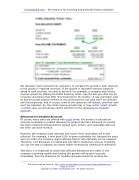
We calculate 'cash received from customers' to compare the growth in cash received to the growth in reported revenues. If the growth in reported revenues jumps far ahead of cash received, we need to ask why. For example, a company may induce revenue growth by offering favorable financing terms--like the ads you often see for consumer electronics that offer "0% financing for 18 months." A new promotion such as this will create booked revenue in the current period, but cash won't be collected until future periods. And of course, some of the customers will default, and their cash won't be collected. So, the initial revenue growth may or may not be "good" growth- -in which case, we should pay careful attention to the 'allowance for doubtful accounts'.
Allowance for Doubtful Accounts
Of course, many sales are offered with credit terms: the product is sold and an accounts receivable is created. Because the product has been delivered (or service has been rendered) and payment is agreed upon, known, and reasonably assured, the seller can book revenue.
However, the company must estimate how much of the receivables will not be collected. For example, it may book $100 in gross receivables but, because the sales were on credit, the company might estimate that $7 will ultimately not be collected. Therefore, a $7 allowance is created and only $93 is booked as revenue. Hopefully, you can see that a company can report higher revenues by lowering this allowance.
Therefore, it is important to check that sufficient allowances are made. If the company is growing rapidly and funding this growth with greater accounts receivables, then the allowance for doubtful accounts should be growing too.
This tutorial can be found at: http://www.investopedia.com/university/financialstatements/ (Page 22 of 66)
Copyright © 2004, Investopedia.com - All rights reserved.


