


Page 48 - Demo samer flip book
P. 48
Investopedia.com – the resource for investing and personal finance education.
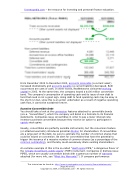
From December 2002 to December 2003, accounts receivable (a current asset) increased dramatically and accounts payable (a current liability) decreased. Both occurrences are uses of cash. In other words, RealNetworks consumed working capital in 2003. At the same time, the company issued a $100 million convertible bond. The company's consumption of operating cash and its issue of new debt to fund that need is not a good sign. Using debt to fund operating cash may be okay in the short run but, since this is an action undertaken as a result of negative operating cash flow, it cannot be sustained forever.
Examine Convertible Debt
You should take a look at the conversion features attached to convertible bonds (a.k.a. "convertibles"), which the company will detail in a footnote to its financial statements. Companies issue convertibles in order to pay a lower interest rate; investors purchase convertibles because they receive an option to participate in upside stock gains.
Usually, convertibles are perfectly sensible instruments, but the conversion feature (or attached warrants) introduces potential dilution for shareholders. If convertibles are a large part of the debt, be sure to estimate the number of common shares that could be issued on conversion. Be alert for convertibles that have the potential to trigger the issuance of a massive number of common shares (as a percentage of the common outstanding), and thereby could excessively dilute existing shareholders.
An extreme example of this is the so-called "death spiral PIPE," a dangerous flavor of the 'private investment, public equity' (PIPE) instrument. Companies in distress issue PIPES, which are usually convertible bonds with a generous number of warrants attached (for more info, see "What Are Warrants?"). If company performance
This tutorial can be found at: http://www.investopedia.com/university/financialstatements/ (Page 48 of 66)
Copyright © 2004, Investopedia.com - All rights reserved.


