


Page 51 - Demo samer flip book
P. 51
Investopedia.com – the resource for investing and personal finance education.
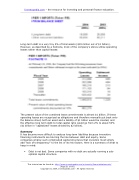
Long-term debt is a very tiny 2% of total assets ($19 million out of $1 billion). However, as described by a footnote, most of the company's stores utilize operating leases rather than capital leases:
The present value of the combined lease commitments is almost $1 billion. If these operating leases are recognized as obligations and therefore manually put back onto the balance sheet, both an asset and a liability of $1 billion would be created, and the effective long term debt-to-total capital ratio would go from 2% to about 50% ($1 billion in "capitalized" leases divided by $2 billion).
Summary
It has become more difficult to analyze long-term liabilities because innovative financing instruments are blurring the line between debt and equity. Some companies employ such complicated capital structures that investors must simply add "lack of transparency" to the list of its risk factors. Here is a summary of what to keep in mind:
• Debt is not bad. Some companies with no debt are actually running a sub- optimal capital structure.
This tutorial can be found at: http://www.investopedia.com/university/financialstatements/ (Page 51 of 66)
Copyright © 2004, Investopedia.com - All rights reserved.


