


Page 60 - Demo samer flip book
P. 60
Investopedia.com – the resource for investing and personal finance education.
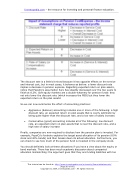
The discount rate is a little bit mixed because it has opposite effects on the service and interest cost, but in most cases, it behaves as before: a lower discount rate implies a decrease in pension expense. Regarding expected return on plan assets, notice that PepsiCo's assumption here has steadily decreased over the two years to finish at 8.2%. Soft equity markets are a double-whammy for pension funds: they not only lower the discount rate (which increases the PBO) but they lower the expected return on the plan assets!
So we can now summarize the effect of accounting practices:
• Aggressive (dubious) accounting includes one or more of the following: a high discount rate, an expected return on plan assets that is overly optimistic by being quite higher than the discount rate, and a low rate of salary increase.
• Conservative (good) accounting includes all of the following: low discount rate, an expected return on plan assets that is near the discount rate, and a high rate of salary increase
Finally, companies are now required to disclose how the pension plan is invested. For example, PepsiCo's footnote explains the target asset allocation of its pension (60% stock and 40% bonds) and then breaks down its actual allocation. Furthermore, you can check to see how much of the pension fund is invested in the company stock.
You should definitely look at these allocations if you have a view about the equity or bond markets. There has been much academic discussion about companies' allocation mismatching: the argument goes that they are funding liabilities with too
This tutorial can be found at: http://www.investopedia.com/university/financialstatements/ (Page 60 of 66)
Copyright © 2004, Investopedia.com - All rights reserved.


