


Page 14 - OffGrid East Coast Special Edition 2016
P. 14
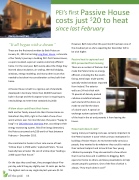
(Nancy Russell/CBC)
“It all began with a dream”
These are the first words written by Beth Peters on January 21, 2014 in her blog Long River House, a chronicle of her family’s journey in building PEI’s first Passive House, a super-insulated, super-air sealed, extremely efficient home. For the next year, Beth wrote about the things they learned about insulation, air sealing, thermal bridging, windows, energy modeling, and many other issues that needed to be taken into consideration as they built their home.
A Passive House is built to a rigorous set of standards developed in Germany. More than 40,000 have been built in Europe and the European Union is requiring any new buildings to meet these standards by 2020.
A blow dryer could heat their home
Beth and her family moved into their Passive Home on Valentine’s Day 2015, right in the midst of one of our worst winters ever. Ten months later, they were “happy to
However, Beth notes that this past month has been one of the cloudiest yet so she’s expecting her December bill to be a bit higher.
Passive heat is captured and 85% prevented from leaving There are a number of features that make the Peters home so energy efficient, including the five south- facing, extra large, triple-paned, specially-sealed windows imported from Ireland. The exterior
walls are 24-inch thick with
75 pounds of densely packed
cellulose insulation between
each stud and the doors are
made to seal like the doors
of a bank vault. A special air
exchange system captures 85%
of the heat in the air and prevents it from leaving the
PEI’s first Passive House costs just $20 to heat
since last February
ttttfttttttthouse. brag” in a CBC television interview that, according to their
energy monitoring system, TED (The Energy Detective), the Peters consumed only $20 worth of heat between February – December 2015.
One small electric heater is their sole source of heat.
“A blow dryer is 1500 watts,” explained Peters. “So we basically have a heater the size of a blow dryer heating a 2,000 square foot house.”
On the days they used heat, they averaged about 4 kw per day, which they pay slightly over 13 cents per kw for. The highest cost on any single day last year was $1.50.
How much does it cost?
Saving money on heating costs was certainly important to the Peters however it wasn’t their primary motivation for building a Passive House. As environmentally-conscious people, they wanted to do whatever they could to reduce their carbon footprint and to teach their four young children by example. They also wanted to show others that it can be done and in addition to blogging, Beth opens her home to others and does presentations to help answer people’s questions. One of the first of which is always, “How much does it cost?”
off the grid 14
fffttt


