


Page 36 - OffGrid East Coast Special Edition 2016
P. 36
Creating a Solar City
tftttttfttttttffttffftfftttttfttfffttffftttttttttfttMunicipalities Leading the Charge
By Julia Feltham
What are LICs?
Historically, LICs have been a tool used by municipalities to finance improvements for a specific neighbourhoods, such as financing roads, a water line extension or new sidewalks. The cost of the improvement is assessed and an LIC is added to the property tax of the landowners that benefit until their share of the cost is paid in full. If a property is sold, the LIC is transferred to the new owner.
The tool is regulated by the province’s Municipalities Act. Recently, Nova Scotia changed the rules under this act to bolster the use of green infrastructure and create green jobs.
tfEver wonder about the role municipalities can play in making the shift towards renewable energy and energy efficiency?
Look no further than municipalities in Nova Scotia. They are national leaders in innovating the use of Local Improvement Charges (LICs).
Halifax: The Solar City
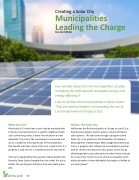
Halifax was the first municipality in Canada to use LICs to help private property owners assess, install and finance solar systems. This was done through a program called Solar City. In an address to the Federation of Canadian Municipalities, Halifax Mayor Mike Savage described Solar City as a program that “allows the municipality to partner with its citizens to bring more solar power to the city by allowing people to put solar panels on their house and pay for it over time. There’s no cost to the municipality and it obviously makes it more affordable for people in Halifax to use solar power.”
off the grid 36
ftt


