


Page 379 - Demo
P. 379
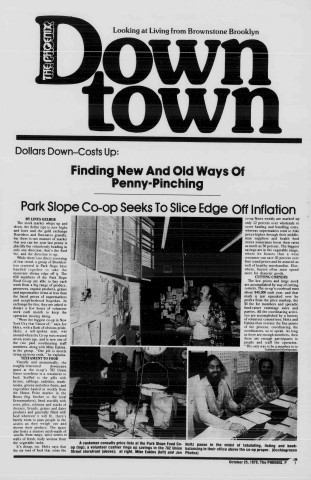
Dollars Down-Costs Up:Finding New And Old Ways OfPenny-PinchingPark Slope Co-op Seeks To Slice Edge Off InflationBY LINUS GELBERThe slock market whips up and down, she dollar zips to new highs and lows and the gold exchange flourishes and fluctuates grandly, but there is one manner of market that you can bet your last penny is placidly but relentlessly heading in only one direction: that%u2019s the food biz, and the direction is up.While there%u2019s no direct reversing of that trend, a group of Brooklynites centered in Park Slope have banded together to take the monetary slicing edge off ij. The 650 members of the Park%u2019Slope Food Co-op are able to buy each week from a big range of produce, preserves, organic products, grains and supermarket items at less than the listed prices of supermarkets and neighborhood bogedas. In exchange for this, they are asked to donate a few hours of volunteer work each month to keep the operation moving along.%u201c Were the biggest co-op in New York City that I know of,%u201d says Joe Holtz, with a flash of obvious pride. Holtz, a soft-spoken man, was around when the Co-op was created seven years ago, and is now one of the two paid coordinating staff members, along with Mike Eakins, in the group. %u201c Our job is mostly tieing up loose ends,%u201d he explains. TESTAMENT TO FOODVisually and aromatically, the roughly-renovated downstairs space at the co-op%u2019s 782 Union Street storefront is a testament to food. Stuffed to the gills with lettuce, cabbage, radishes, mushrooms, greens and other fruits, and vegetables hauled in weekly from the Hunts Point market in the Bronx (big brother to the local Greenmarkets), lined sturdily with rows, piles, columns and stacks of cheeses, breads, grains and dairy products and generally filled with food wherever it will fit, there%u2019s barely room to pass people in the aisles as they weigh out and choose their produce. The space also hosts a sensory mish-mash of smells, from tangy, spicy scents to wafts of fresh, leafy aromas from the vegetable racks.It%u2019s cheap, too. Holtz says that the six tons of food that cross theco-op floors weekly are marked up only 12 percent over wholesale to cover hauling and handling costs, whereas supcrmakets tend to hike prices higher through their middleman suppliers and health food stores sometimes boost their rates as much as 50 percent. The biggest savings are in the vegetable range, where he boasts that a wise am sumer can save 30 percent over fruit stand prices and be assured as well of healthy merchandise. Elsewhere, buyers often must spend more for chancier goods. CUTTING CORNERSThe low prices and large stock are accomplished by way of cutting atrners. The co-op's overhead runs about $40,000 each year, and that mark is just squeaked over by profits from the price markup, the $5 fee for members and sporadic fund-raiser rummage sales and parties. All the coordinating activities are accomplished by a battery of volunteer committees; Holtz and Eakins then oversee the fine points of the process, coordinating the coordinators, so to speak. As long as there are enough members, then there arc enough participants to people and staff the operation.%u2018 %u2018The only way to be a member is to Continued on following pageA customer consults price lists at the Park Slope Food Co- Holtz pause in the midst of tabulating listinq and boo!K r r SETin ,heir 0,,lce ab0' e ,he &ZVSUZOctober 25,1979, The PHOENIX, P 9


