


Page 26 - Priorities #55 2013-March/April
P. 26
26
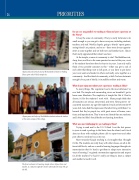
Alyssa and a few friends ascend the hundreds of stairs to Foding Shan, upon which Huiji temple sits.
Do you see any parallels to teaching in China and your experience at the Priory?
I’d say the sense of community. Priory is really fortunate to be small enough so you can get to know everyone, including students, teachers, and staff. Weekly chapels, going to friends’ sports games, seeing friends’ art projects, and so on – there were always opportu- nities to come together and see both new and familiar faces. I know that I really appreciated that when I was here.
At the temple, a sense of community is vital. The bhikkhuni eat, sleep, learn, and live in the same quarters for most of the year; most of the students have been here for four to six years. I can only really think of two possible outcomes to this – either you get so sick of each other that things start to fall apart, or you learn to put down your own wants and needs for others and really come together as a community. And that kind of community, which I’ve been fortunate enough to be a part of briefly, is incredibly resilient and warm.
What do you enjoy most about your experiences teaching in China?
So many things. The vegetarian food is the most delicious I’ve ever had. The temple and surrounding views are beautiful. I get to learn some Mandarin. The simplicity of temple life. But if I had to choose, it’d be the students I work with. Many people think that all monastics are serious, introverted, and stern. Having never en- countered monastics my age (the students I teach are between 20-35 years old), I also had this impression. But after living with them, I’ve learned that they’re people too, with great senses of humor, emo- tions, and imperfections. They’re more my friends than my students, and I often feel like I should be the one learning from them.
What was most challenging for you teaching in China?
Trying to send mail to the U.S.! I think I was the first person in years to send a package to the States from the island, and it took about an hour with multiple phone calls to supervisors and other post offices to send my box on its way.
More seriously though, teaching is a lot tougher than I thought it’d be. The students are really busy with other classes, are all at dif- ferent skill levels, and are so used to learning languages through rote memorization that it’s hard to get them to adopt more interactive ways of learning. I’ve gained a tremendous appreciation and respect for all the teachers I’ve had. It’s really one thing to know a subject and another to teach it well.
Alyssa poses with a few of the bhikkhu students whom she teaches at the main campus of the college.
The front entrance to Yuantong temple, where Alyssa lives and teaches, is a welcome sight for visitors who make the steep trek up the hill.


