


Page 27 - Priorities #55 2013-March/April
P. 27
27
How did your experiences at the Priory prepare you for what you’re doing now and when you were in college?
Priory emphasized the value of individual reflection. A memory that stands out was during a sixth grade theology class. We were asked to write on a piece of paper something we wanted to let go of – a fear, regret, or something else-- and then we burned the papers and released the ashes in a nearby creek. In high school, we had chapels and class retreats – all were important times for reflection. At the time, I sometimes chafed at “obligatory” reflection periods, but these are things I’ve come to appreciate in retrospect. I’ve really tried to cultivate this practice in school and continuing forward.Especially now, in a very foreign place. Values, ways of living, ambitions – mine are challenged on a daily basis at Putuoshan. Sometimes it can be disorienting, but by being able to look inwardly and process my re- actions and thoughts, I’ve been able to learn a lot about myself and stay grounded.
What are some of the things you’ve learned since teaching in China?
Learning to slow down and pay attention to what I do. It sounds cliché, “being mindful,” but when there’s nothing to distract you, appreciating everything you do, even the mundane, becomes critical. The things that fill your day, supposedly giving meaning, progress, and accomplishment to your life – they’re not there. The first week, I kept thinking that I had made the wrong decision, thinking about what else I could be doing to ‘get ahead’—internships, jobs, grad school— it was pointless and unhealthy. I finally picked up a book I had brought along, and in the first few pages the author talks about paying attention to what you’re doing, or else it’s not worth doing at all. You won’t enjoy anything if you’re not there, mentally. I kind of had a wake-up moment— the words made so much sense, espe- cially given where I was. So I started practicing this a little at a time everyday. It was really difficult for me and continues to be, for sure. But then you start to notice that the world opens up to you in subtle ways; you notice things that you didn’t notice before. You become more patient. More grateful.
What are some of your future plans, hopes?
A lot of my students hope to improve their English enough to study and/or teach abroad, so I hope that I can help them reach those goals and hear about where they are in a few years. As for what I’m doing, I’m not sure yet. I’d like to spend some more time in Asia, ei- ther studying or working, perhaps on environmental and/or human rights issues.
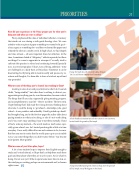
Facing the South Sea, this 33-m tall statue of Guan Yin is a well-known landmark on Putuoshan.
All the bhikkhuni students have all their classes in one classroom, located inside the grounds of the temple.
A large lotus-filled pond greets visitors as they enter the grounds of Puji temple, one of the biggest on the island.


