


Page 252 - Sanidhya 2025
P. 252
A society that respects its environment, infrastructure, and fellow
                citizens instils pride in its people.This sense of ownership and identity
                strengthens national unity.

                The foundation of a civilized society lies in the civic consciousness of
                its people. Civic sense lies in abiding by the law, respecting others
                and maintaining decorum in public places. Individualism, vandalism,
                intolerance, racism, road rage etc. are all examples of lack of civic
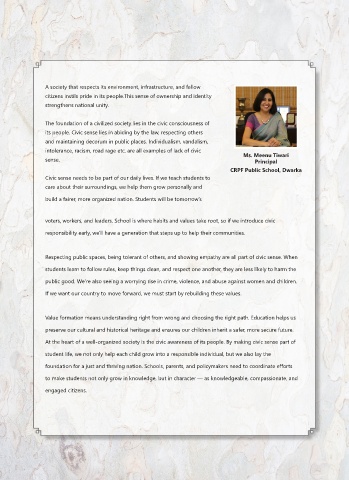
                sense.                                                           Ms. Meenu Tiwari
                                                                                     Principal
                                                                             CRPF Public School, Dwarka
                Civic sense needs to be part of our daily lives. If we teach students to
                care about their surroundings, we help them grow personally and
                build a fairer, more organized nation. Students will be tomorrow’s


                voters, workers, and leaders. School is where habits and values take root, so if we introduce civic
                responsibility early, we’ll have a generation that steps up to help their communities.


                Respecting public spaces, being tolerant of others, and showing empathy are all part of civic sense. When

                students learn to follow rules, keep things clean, and respect one another, they are less likely to harm the
                public good. We’re also seeing a worrying rise in crime, violence, and abuse against women and children.

                If we want our country to move forward, we must start by rebuilding these values.


                Value formation means understanding right from wrong and choosing the right path. Education helps us
                preserve our cultural and historical heritage and ensures our children inherit a safer, more secure future.

                At the heart of a well-organized society is the civic awareness of its people. By making civic sense part of
                student life, we not only help each child grow into a responsible individual, but we also lay the

                foundation for a just and thriving nation. Schools, parents, and policymakers need to coordinate efforts
                to make students not only grow in knowledge, but in character — as knowledgeable, compassionate, and

                engaged citizens.

