


Page 18 - MENU - MARCH / APRIL
P. 18
priced beers and wines, but it was cocktails that really got things hopping. That  rst
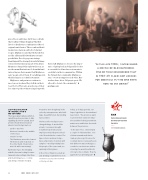
list of cocktails was a combination of Proof originals and classics. The second and third menus were made up entirely of original recipes. Migliarese says that the bar shelves are like a library,  lled with interests and possibilities. Proof’s gorgeous, vintage branding and the strangely wonderful imag- ery used in their menus is part of the allure. Menus are changed throughout the year, as are the menu illustrations. So beautiful and interesting are their menus, that Migliarese says “people collect them. It’s a talking point, which is huge in a cocktail restaurant.”
Migliarese and partners continue to meet once a week and they talk about how to get better. They also spend some of their free time together volunteering along with
their sta . Migliarese stresses the impor- tance of giving back in Calgary. He feels it is essential for all modern restaurants to contribute in their communities. Within the Calgary bar community, Migliarese says, “everyone supports each other. Bar- tenders share ideas. Calgary is great. We all seek to elevate the community.” m proofyyc.com
“In the late 1990s, I interviewed a couple of old bartenders. One of them remembered that in 1948-49, places got licenses for cocktails but no one knew how to mix drinks!”
LIQUOR LEGISLATION
IN CANADA, HOW’D
WE GET HERE?
There were great debates which in- spired the policies we have to date regarding alcohol in Canada. Each province made decisions about when to turn the taps back on:
• Quebec was  rst
• Western Canada in the middle of the 1920s
• Ontario in 1927
• The Maritimes were the slowest. PEI held on until 1948, but on the other hand, the province was rife with rum running!
By the late 1940s, the emerging middle-class was looking for enter- tainment in bar settings other than grubby drinking places. Cocktail and dining LOUNGES emerged.
Properties were bought up in the 1960s by entrepreneurs, who built large, beautiful hotels. Bartending was lucrative.
The  rst self-serve liquor store changed things. It worked like
a bank. Consumers brought
in numbered permits and an employee would dispense the al- cohol from behind a counter. The liquor stores we know today— fancy emporiums of alcohol with samples—would probably have the people of the 1920s and 30s spinning in their graves.
In the 1970s, things loosened up and drinking establishments took on themes such as the Irish Pub or the Sports Bar.
Today, as in days gone by, our liquor legislation is decentralized. Says Heron, “the provinces want to protect their own beer indus- tries and the federal government wants more and better free trade between the provinces.
“In the late 1990s, I interviewed
a couple of old bartenders. One of them remembered that in 1948-49, places got licenses for cocktails but no one knew how to mix drinks! He was working as a conductor on streetcars and on slow days he would read books on how to mix cocktails. Then he applied for a bartending job!” m
DIG IN
Check out Restaurants Canada’s
Raise the Bar report on provincial
liquor policies ______
VISIT restaurantscanada.org
18 MENU MARCH / APRIL 2017


