


Page 31 - MENU - MARCH / APRIL
P. 31
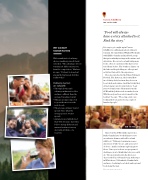
Carson Schi orn
Inn on the Lake
“Food will always
have a story attached to it. Find the story.”
It’s easy to get caught up in Carson Schi orn’s enthusiasm about culinary tourism. He runs Yukon Whisky Weekends with Edible Canada and Air North, a trip that pairs whisky tastings with cuisine and adventure. He serves local and indigenous foods, often to customers who have never tried them before. The bon res, dinner on the lake and dogsledding are all regional activities that add to the experience.
He’s also involved in the Yukon Culinary Festival. The  rst year, the festival  ew
in celebrity chefs, but now they focus on local chefs and cuisine. And that’s why they attract many out-of-town visitors. “Last year we found some old menus from the
SS Klondike [a historical sternwheeler in Whitehorse] and recreated a meal for the festival,” he says. “We set up a tent over- looking the boat and served a couple of hundred people.”
INN ON THE LAKE
Based on the SS Klondike experience, Parks Canada later booked him to serve
an exclusive dinner, with all local and
wild food. “Culinary tourism increases awareness of who we are, and opens a lot
of doors.” And he’s always exploring new ideas. “Once you’ve done one program, it challenges you to think what else you could do.” He’s now involved in the  rst-ever “Across the Top of Canada” trip, with stops in Whitehorse, Yellowknife, Rankin Inlet and more, featuring local chefs and regional food along the way.
CONTINUED ON PAGE 32
MARCH / APRIL 2017 MENU 31
WHY CULINARY TOURISM MATTERS
With a multitude of culinary choices, making yourself stand out is key. “The advantage of food tourism is it di erentiates you from the competition,” Macken- zie says. “It’s hard to stand out among the big brands, but this really works.”
Culinary tourists are valuable:
• The typical wine and
culinary enthusiast is older and more a uent than the average Canadian tourist
• This age group is expected to grow the most over the next decade
• The average culinary tourist spends twice what the average generic tourist spends
• An American study showed that 44% of leisure travellers believe trying di erent and unusual cuisines is a very desirable attribute of a vacation


