


Page 32 - MENU - MARCH / APRIL
P. 32
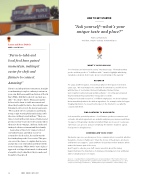
Laura and Rene Dubois
White Owl Bistro
“Farm-to-table and local food have gained momentum, making it easier for chefs and farmers to connect. Amazing!”
If you’re an independent restaurateur, it might seem daunting to explore culinary tourism on your own. But Laura and Rene Dubois of North Bay’s White Owl Bistro show it’s not just pos- sible—it’s a way to thrive. They passionately believe in the farm-to-table movement and when they bought the bistro, they slowly began bringing local food onto the menu. Laura says, “We reached out to local farmers and found a young couple starting CSAs and raising cattle who were willing to work with us.” They con- tinue to work with a wide range of farmers and producers; they’ve also moved to a farm, where they raise their own pigs, chickens, ducks and turkeys for their restaurant and their family. Laura shares this story: “A guest ordered
our turkey burger, and when our server returned to check on her, she said it was the best turkey burger she’d ever eaten. This gave our server the chance to explain that we raise and produce our own turkey and then told the story of our farm.” White Owl’s “taste of place” approach: real ingredients made to shine with a tangible story behind how they’re made and brought to the plate. m
HOW TO GET STARTED
“Ask yourself—what’s your unique taste and place?”
Rebecca Mackenzie,
President, Ontario Culinary Tourism Alliance
WHAT’S YOUR PASSION?
“Food tourists are interested in a story,” Mackenzie says. “Think about what you do and how you do it.” Schi orn adds, “I want to highlight what being Canadian is all about. But it’s also about concentrating on the regional.”
RESEARCH
For Laura and Rene Dubois, research was what set their passion in motion. Laura says, “We read many books, watched documentaries, and fell in love with the likes of Joel Salatin, Michael Stadtlander, Michael Pollan,
Lynn Crawford, Jamie Kennedy and Alice Waters.” Once they were inspired, they knew what they wanted their restaurant to look like.
“Find your niche and research it,” Schi orn emphasizes. He doesn’t always know immediately what to do with an ingredient. For example, when he began foraging dandelions, he researched recipes on the Internet to see what he could do with them.
FIND PARTNERS TO WORK WITH
Look around for potential partners—local farmers, producers, wineries and orchards. Ask what ingredients are available and plan your menu around them. “Be aware of the growing calendar and when things are in season,” Laura says. “We freeze, can, process and use everything. The farmers’ market is a great focal point for doing business.”
COMMUNICATE YOUR STORY
Mackenzie says once you know your story, communication is essential, whether by website, menu or chalkboard. “Share the stories of the growers, producers and farmers you support.” Laura and Rene do just that on their website, which makes the farmers part of the story.
Don’t forget to educate your sta . Laura’s anecdote about the turkey
burger illustrates the importance of employees knowing your story and being able to talk about your core values.
(Sources: 1. Canadian Wine & Culinary Enthusiasts: A Special Analysis of the Travel Activities and Motivation Survey - prepared for the Canadian Tourism Commission, 2. publications.gc.ca, 3. Ibid, 4. Ryerson University/OCTA website, 5. YBP&R/Yankelovich/OCTA website: ontarioculinary.com)
32 MENU MARCH / APRIL 2017


