


Page 62 - “O‘ZBEKISTON – 2030 STRATEGIYASI: AMALGA OSHIRILAYOTGAN ISLOHOTLAR TAHLILI, MUAMMOLAR VA YECHIMLAR”
P. 62
✓  Development  of  the  state  financial  sector  and  financial  markets:
               Modernizing  state  assets  and  enhancing  market  coordination  through
               privatization. For example, initiatives to list the National Investment Fund’s assets
               on international markets could attract investment flows.
                   ✓  International financial cooperation and resource mobilization: Financing
               infrastructure and institutional reforms continues through projects and loans with
               institutions such as the World Bank and IMF.
                  Practical Situation and Trends in Uzbekistan (Based on Recent Updates)
                  In recent years, the Uzbek economy has demonstrated relatively high growth
            rates; IMF and World Bank reports note both growth and the stability of reserves,
            although they also highlight the presence of inflationary pressures and external risks.
            During  2024–2025,  measures  such  as  the  revision  of  energy  prices  and  other
            transitional steps have increased inflationary pressure, prompting the central bank
            to strengthen monetary measures. The IMF’s 2025 assessment indicates real GDP
            growth and inflation levels for Uzbekistan, underscoring the need for coordinated
            policy actions.


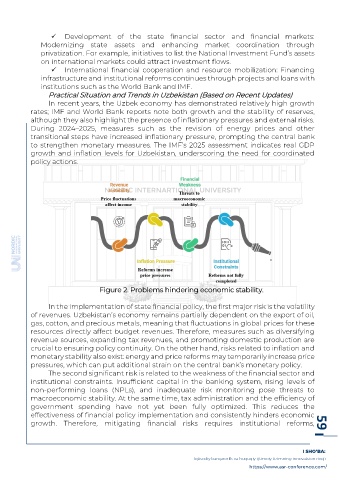
                                    Figure 2. Problems hindering economic stability.

                  In the implementation of state financial policy, the first major risk is the volatility
            of revenues. Uzbekistan’s economy remains partially dependent on the export of oil,
            gas, cotton, and precious metals, meaning that fluctuations in global prices for these
            resources directly affect budget revenues. Therefore, measures such as diversifying
            revenue sources, expanding tax revenues, and promoting domestic production are
            crucial to ensuring policy continuity. On the other hand, risks related to inflation and
            monetary stability also exist: energy and price reforms may temporarily increase price
            pressures, which can put additional strain on the central bank’s monetary policy.
                  The second significant risk is related to the weakness of the financial sector and
            institutional  constraints.  Insufficient  capital  in  the  banking  system,  rising  levels of
            non-performing  loans  (NPLs),  and  inadequate  risk  monitoring  pose  threats  to
            macroeconomic stability. At the same time, tax administration and the efficiency of
            government  spending  have  not  yet  been  fully  optimized.  This  reduces  the
            effectiveness of financial policy implementation and consistently hinders economic
            growth.  Therefore,  mitigating  financial  risks  requires  institutional  reforms,                59


                                                                                                           I SHO‘BA:

                                                                     Iqtisodiy barqarorlik va huquqiy-ijtimoiy tizimning innovatsion rivoji

                                                                                         https://www.asr-conference.com/

