


Page 71 - “O‘ZBEKISTON – 2030 STRATEGIYASI: AMALGA OSHIRILAYOTGAN ISLOHOTLAR TAHLILI, MUAMMOLAR VA YECHIMLAR”
P. 71
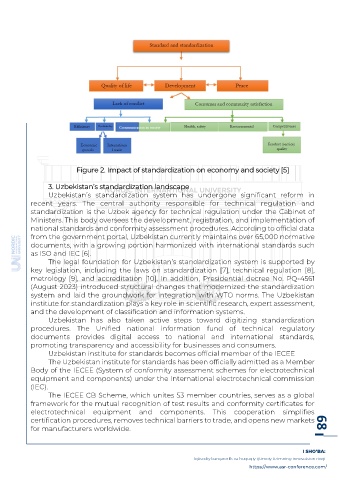
Figure 2. Impact of standardization on economy and society [5]

                  3. Uzbekistan’s standardization landscape
                  Uzbekistan’s  standardization  system  has  undergone  significant  reform  in
            recent  years.  The  central  authority  responsible  for  technical  regulation  and
            standardization is the Uzbek agency for technical regulation under the Cabinet of
            Ministers. This body oversees the development, registration, and implementation of
            national standards and conformity assessment procedures. According to official data
            from the government portal, Uzbekistan currently maintains over 65,000 normative
            documents, with a growing portion harmonized with international standards such
            as ISO and IEC [6].
                  The legal foundation for Uzbekistan’s standardization system is supported by
            key  legislation,  including  the  laws  on  standardization  [7],  technical  regulation  [8],
            metrology  [9],  and  accreditation  [10].  In  addition,  Presidential  decree  No.  PQ-4561
            (August 2023) introduced structural changes that modernized the standardization
            system and laid the groundwork for integration with WTO norms. The Uzbekistan
            institute for standardization plays a key role in scientific research, expert assessment,
            and the development of classification and information systems.
                  Uzbekistan  has  also  taken  active  steps  toward  digitizing  standardization
            procedures.  The  Unified  national  information  fund  of  technical  regulatory
            documents  provides  digital  access  to  national  and  international  standards,
            promoting transparency and accessibility for businesses and consumers.
                  Uzbekistan institute for standards becomes official member of the IECEE
                  The Uzbekistan institute for standards has been officially admitted as a Member
            Body of the IECEE (System of conformity assessment schemes for electrotechnical
            equipment and components) under the International electrotechnical commission
            (IEC).
                  The IECEE CB Scheme, which unites 53 member countries, serves as a global
            framework for the mutual recognition of test results and conformity certificates for
            electrotechnical  equipment  and  components.  This  cooperation  simplifies
            certification procedures, removes technical barriers to trade, and opens new markets                68
            for manufacturers worldwide.


                                                                                                           I SHO‘BA:

                                                                     Iqtisodiy barqarorlik va huquqiy-ijtimoiy tizimning innovatsion rivoji

                                                                                         https://www.asr-conference.com/

