


Page 199 - RAQAMLI TRANSFORMATSIYA DAVRIDA PEDAGOGIK TA’LIMNI RIVOJLANTIRISH ISTIQBOLLARI
P. 199
Comparative analysis method.          This method was used to comparatively study
            the  experience  of  integrating  the  library  environment  into  STEM  education  in
            different socio-cultural contexts (e.g., Kazakhstan, Russia, USA, Indonesia). It helped
            identify  the  most  effective  approaches,  trends,  and  common  challenges  in
            developing methodological recommendations.
                  Systematization  method.       Theoretical  and  practical  data  obtained  during  the
            research  (types  of  library  resources,  methods  of  their  use,  mechanisms  of
            pedagogical impact) were systematized. This served as the basis for presenting the
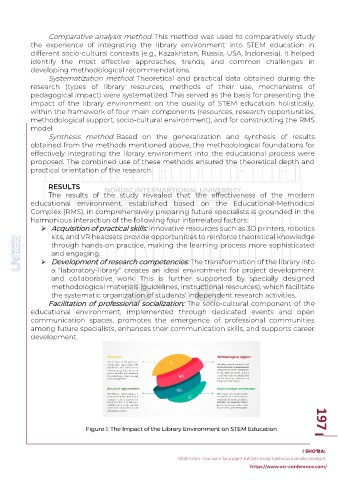
            impact  of  the  library  environment  on  the  quality  of  STEM  education  holistically,
            within the framework of four main components (resources, research opportunities,
            methodological support, socio-cultural environment), and for constructing the RMS
            model.
                  Synthesis  method. Based  on  the  generalization  and  synthesis  of  results
            obtained from the methods mentioned above, the methodological foundations for
            effectively  integrating  the  library  environment  into  the  educational  process  were
            proposed. The combined use of these methods ensured the theoretical depth and
            practical orientation of the research.

                  RESULTS
                  The  results  of  the  study  revealed  that  the  effectiveness  of  the  modern
            educational  environment,  established  based  on  the  Educational-Methodical
            Complex (RMS), in comprehensively preparing future specialists is grounded in the
            harmonious interaction of the following four interrelated factors:
               ➢  Acquisition of practical skills:    Innovative resources such as 3D printers, robotics
                   kits, and VR headsets provide opportunities to reinforce theoretical knowledge
                   through hands-on practice, making the learning process more sophisticated
                   and engaging.
               ➢  Development of research competencies:             The transformation of the library into
                   a  "laboratory-library"  creates  an  ideal  environment  for  project  development
                   and  collaborative  work.  This  is  further  supported  by  specially  designed
                   methodological materials (guidelines, instructional resources), which facilitate
                   the systematic organization of students’ independent research activities.

                  Facilitation of professional socialization: The  socio-cultural  component  of  the
            educational  environment,  implemented  through  dedicated  events  and  open
            communication  spaces,  promotes  the  emergence  of  professional  communities
            among future specialists, enhances their communication skills, and supports career
            development.


                                                                                                                197
                               Figure 1. The Impact of the Library Environment on STEM Education


                                                                                                           I SHO‘BA:

                                                               Sifatli ta’lim – barqaror taraqqiyot kafolati: xorijiy tajriba va mahalliy amaliyot

                                                                                         https://www.asr-conference.com/

