


Page 253 - M. Abrahim Thesis
P. 253
Computer Network                                                             2026


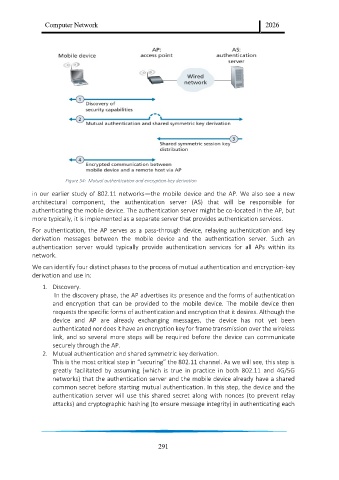
                        Figure 54:  Mutual authentication and encryption-key derivation

            in our earlier study of 802.11 networks—the mobile device and the AP. We also see a new
            architectural  component,  the  authentication  server  (AS)  that  will  be  responsible  for
            authenticating the mobile device. The authentication server might be co-located in the AP, but
            more typically, it is implemented as a separate server that provides authentication services.

            For  authentication,  the AP  serves  as  a  pass-through  device,  relaying  authentication  and  key
            derivation  messages  between  the  mobile  device  and  the  authentication  server.  Such  an
            authentication  server  would  typically  provide  authentication  services  for  all  APs  within  its
            network.

            We can identify four distinct phases to the process of mutual authentication and encryption-key
            derivation and use in:
                1.  Discovery.
                     In the discovery phase, the AP advertises its presence and the forms of authentication
                    and  encryption  that  can  be  provided  to  the  mobile  device.  The  mobile  device  then
                    requests the specific forms of authentication and encryption that it desires. Although the
                    device  and  AP  are  already  exchanging  messages,  the  device  has  not  yet  been
                    authenticated nor does it have an encryption key for frame transmission over the wireless
                    link,  and so several  more  steps  will  be  required  before  the device can communicate
                    securely through the AP.
                2.  Mutual authentication and shared symmetric key derivation.
                    This is the most critical step in “securing” the 802.11 channel. As we will see, this step is
                    greatly  facilitated  by  assuming  (which  is  true  in  practice  in  both  802.11  and  4G/5G
                    networks) that the authentication server and the mobile device already have a shared
                    common secret before starting mutual authentication. In this step, the device and the
                    authentication  server  will  use  this  shared  secret  along  with  nonces (to prevent  relay
                    attacks) and cryptographic hashing (to ensure message integrity) in authenticating each


                                                         291

