


Page 10 - December 2025 newsletter
P. 10
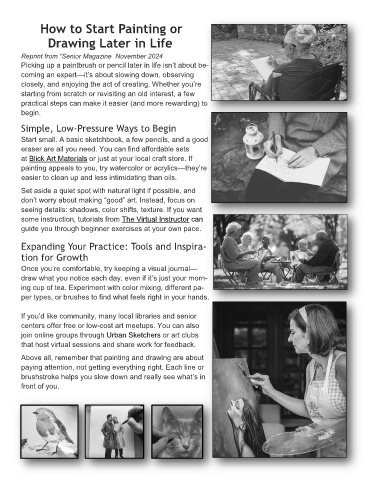
How to Start Painting or

               Drawing Later in Life

        Reprint from “Senior Magazine  November 2024

        Picking up a paintbrush or pencil later in life isn’t about be-
        coming an expert—it’s about slowing down, observing
        closely, and enjoying the act of creating. Whether you’re
        starting from scratch or revisiting an old interest, a few
        practical steps can make it easier (and more rewarding) to
        begin.


        Simple, Low-Pressure Ways to Begin
        Start small. A basic sketchbook, a few pencils, and a good
        eraser are all you need. You can find affordable sets
        at Blick Art Materials or just at your local craft store. If
        painting appeals to you, try watercolor or acrylics—they’re
        easier to clean up and less intimidating than oils.
        Set aside a quiet spot with natural light if possible, and
        don’t worry about making “good” art. Instead, focus on
        seeing details: shadows, color shifts, texture. If you want
        some instruction, tutorials from The Virtual Instructor can
        guide you through beginner exercises at your own pace.


        Expanding Your Practice: Tools and Inspira-
        tion for Growth
        Once you’re comfortable, try keeping a visual journal—
        draw what you notice each day, even if it’s just your morn-
        ing cup of tea. Experiment with color mixing, different pa-
        per types, or brushes to find what feels right in your hands.

        If you’d like community, many local libraries and senior
        centers offer free or low-cost art meetups. You can also
        join online groups through Urban Sketchers or art clubs
        that host virtual sessions and share work for feedback.

        Above all, remember that painting and drawing are about
        paying attention, not getting everything right. Each line or
        brushstroke helps you slow down and really see what’s in
        front of you.

